To the Moon & Beyond: The Kennedy Space Center

On the bright sunny Florida morning of Earth Day 2016 (22nd April) we set out on our maiden drive on the “other side” to the Kennedy Space Center. A few navigational hiccups and acclimatisation with the “other side” later, we were comfortably cruising down FL-528 E (state road/highway 528 heading East) towards our destination.

As we entered the NASA Causeway, it was a breathtaking view of shimmering water of the lagoon Indian River on both sides of the road. We crossed over to the NASA Parkway and were delighted by our first sighting of an American alligator in the adjoining stream! We later were told by our guides that the Space Center prides itself for being a haven for the resident fauna comprising alligators, bald eagles and many others, including some endangered species.

IMG_1364

IMG_1329

We started with the bus tour that took us around the massive facility to see some of the massive equipment used to move the rockets and shuttles for launch and the rocket assembly building, before taking us to one of the major highlights – the Apollo/Saturn V Center.

IMG_1275IMG_1278

IMG_1282

Here we were invited into the actual Command Center that was used for the launch of the Apollo 8 to view a film on the history of the NASA space program from its start until Neil Armstrong’s small step that was a giant leap for mankind.

The Apollo 8 Command Center

It was so overwhelming to sit there and watch history unfold, we were close to tears. The insecurity of the US at Russia’s launch of Sputnik 1 in 1957 (which triggered the establishment of NASA) followed by the successful space mission of Yuri Gagarin in 1961 at the height of the cold war, the challenge of “We choose to go the moon” set by President John F Kennedy, the tragedy of Apollo 1 and the perseverance of so many people in the years that followed leading to the success of multiple Apollo missions until Apollo 11 landed on the moon on 20th July 1969.

As we stepped out of the command center, we came face to face with the massive 363-foot Saturn V rocket, the largest ever made, used to launch the Apollo vehicles and others over a 20-year period. Simply awesome!

IMG_1291

IMG_1295 IMG_1298

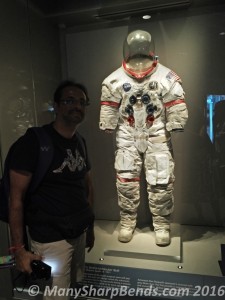
We then walked around admiring all the memorabilia from the Apollo missions that are exhibited here – lunar rock samples (one of which can be touched), a moon buggy, space suits of various astronauts including Alan Shepard (the second human & first American in space), Kitty Hawk (the shuttle/command module) of the Apollo 14 mission

IMG_1302IMG_1308

IMG_20160422_111521IMG_1320

IMG_1303IMG_20160422_111951IMG_20160422_112050

We learnt that the shuttles were named by the commanders of the mission, so Kitty Hawk was Alan Shepard’s choice for the Apollo 14 command module and Neil Armstrong had christened the Apollo 11 command module as Columbia. The lunar modules which detached from the command module and actually landed on the moon had their own names too – “Eagle” was the first one. We watched a simulation of the tense moments preceding the landing of the Eagle on the moon when communication was lost with the Houston Mission Control (which takes over from the Kennedy Center after launch and manages NASA missions until reentry back into the Earth’s atmosphere when Kennedy takes over again) and Eagle had to change course and choose a different landing spot from the originally planned one. Eagle ran into a low-fuel situation and all mission controllers could do was hold their breath and cross their fingers until they heard Neil Armstrong say “the Eagle has landed“! Heart-stopping!

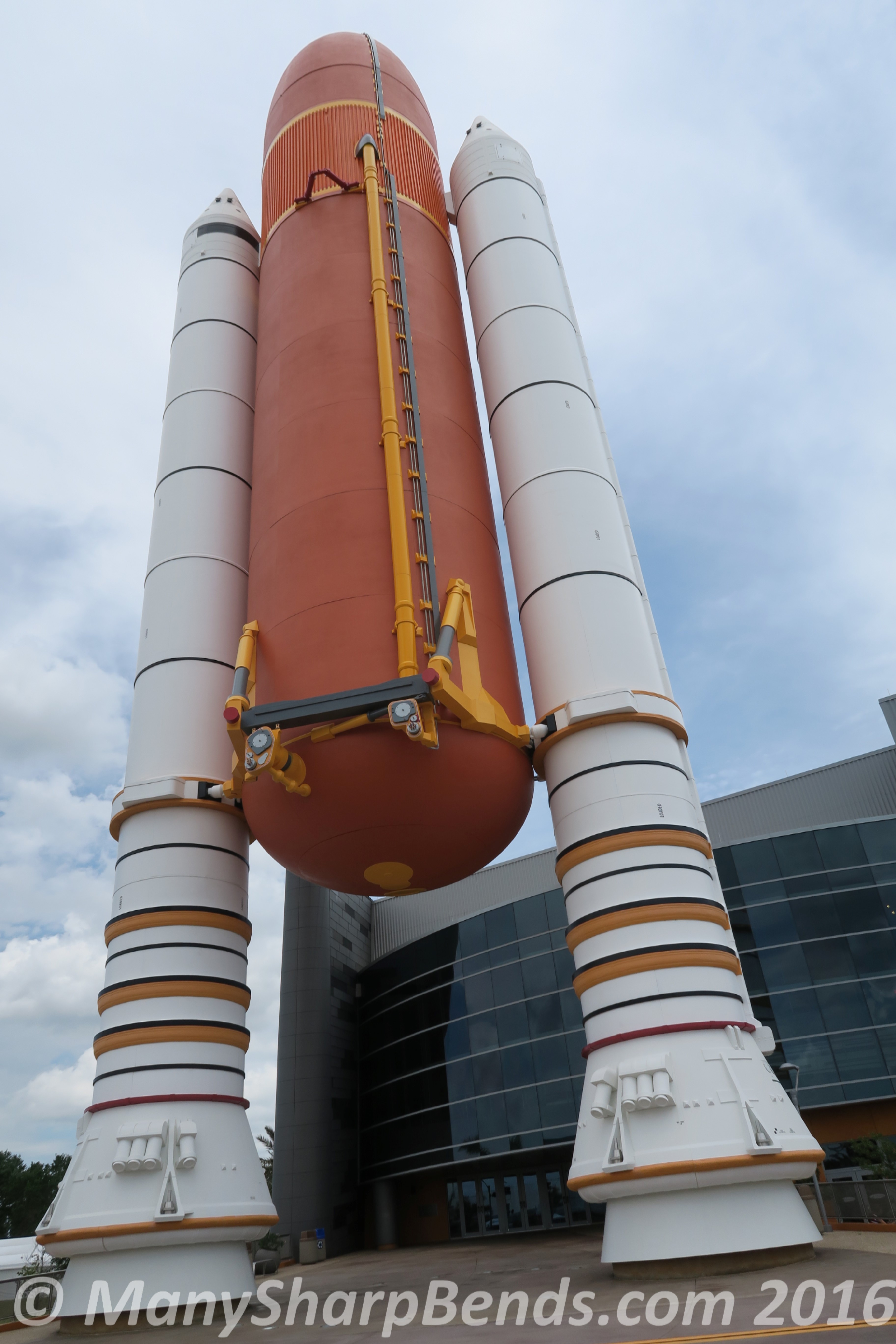
After all this excitement, we headed back to the bus to get back to the main visitor’s complex to see the next highlight for the day – the Space Shuttle Atlantis exhibit. On the way our lady guide (& driver) pointed out the huge nest of a bald eagle that has been an inhabitant of many years. A huge fuel tank (a real one) with solid rocket booster replicas make for a dramatic entrance to the exhibit that covers 30 years of space shuttle missions from 1981 – 2011.
IMG_1330

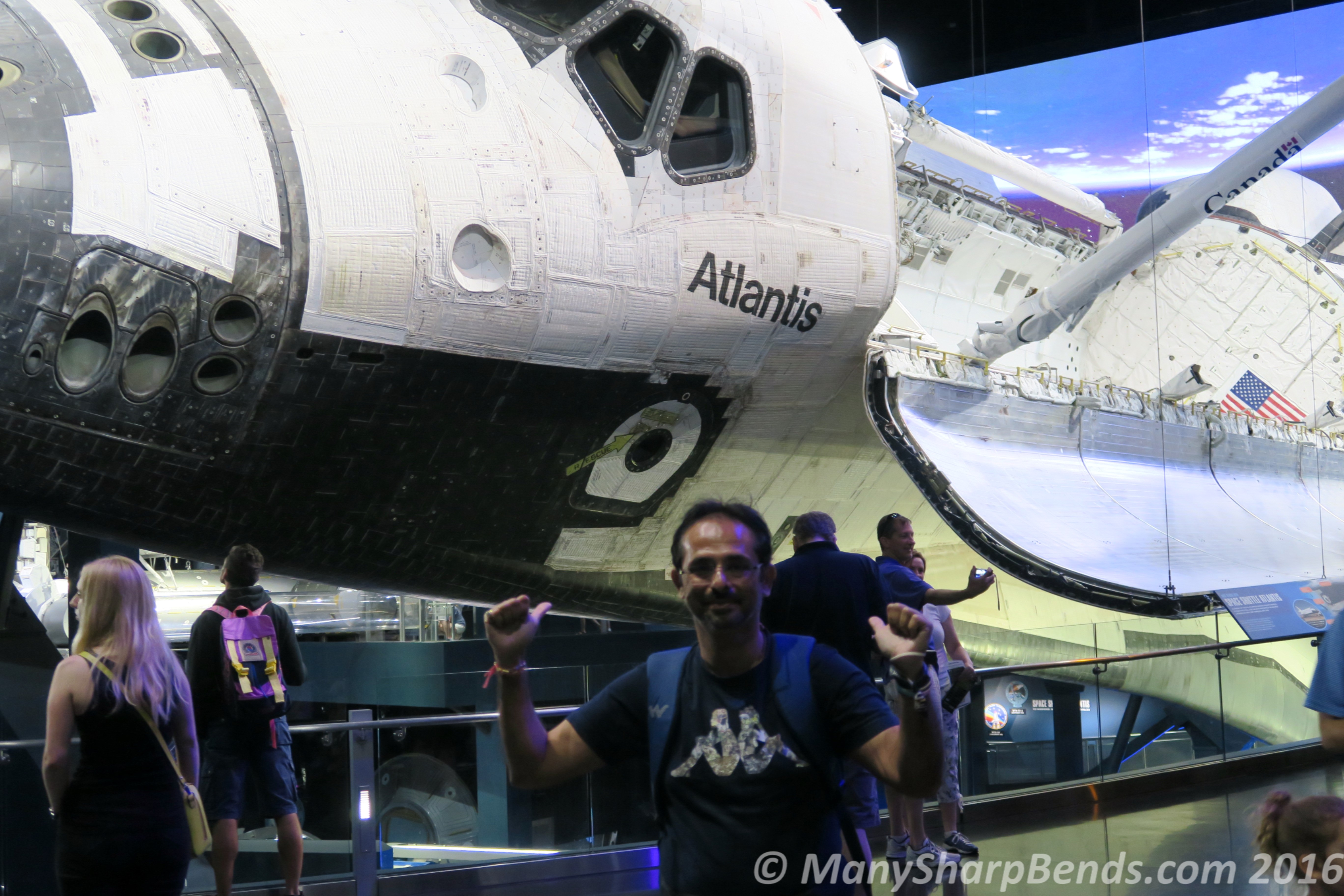
We were introduced to how the concept of a space shuttle orbiter that can take-off and land back like a plane evolved with many iterations on feasible design and years of hard work of multiple teams of engineers. Reuse was also a major consideration and so came the reusable solid rocket boosters that were separate from the fuel tank and retrieved after each launch for reuse. We learnt that the space shuttle does not take off vertically, rather it launches into a trajectory and reaches a velocity that lets it escape being pulled down by gravity but then orbit the Earth, much like the moon. After the introduction, its curtains-up and we gasped at the real space shuttle Atlantis that was suspended right in front of us!
IMG_1356

All around it are the facts and figures as well as some simulators to help us get a feel for what the controls of a shuttle look like and what it could be like for astronauts to work in space.

IMG_1349

IMG_1339

But the best of all was the chance to actually experience the Space Shuttle Launch Simulator to get a feel for what it would be like to be inside a space shuttle during its launch! We got to experience being vertical in the shuttle for launch position and then “zero G” in just a few moments as the shuttle accelerates from 0 to 17,500 mph (28,175 kmph) in 8 minutes!! Definitely a once-in-a-lifetime experience for me, could be more than once for my daughter though!

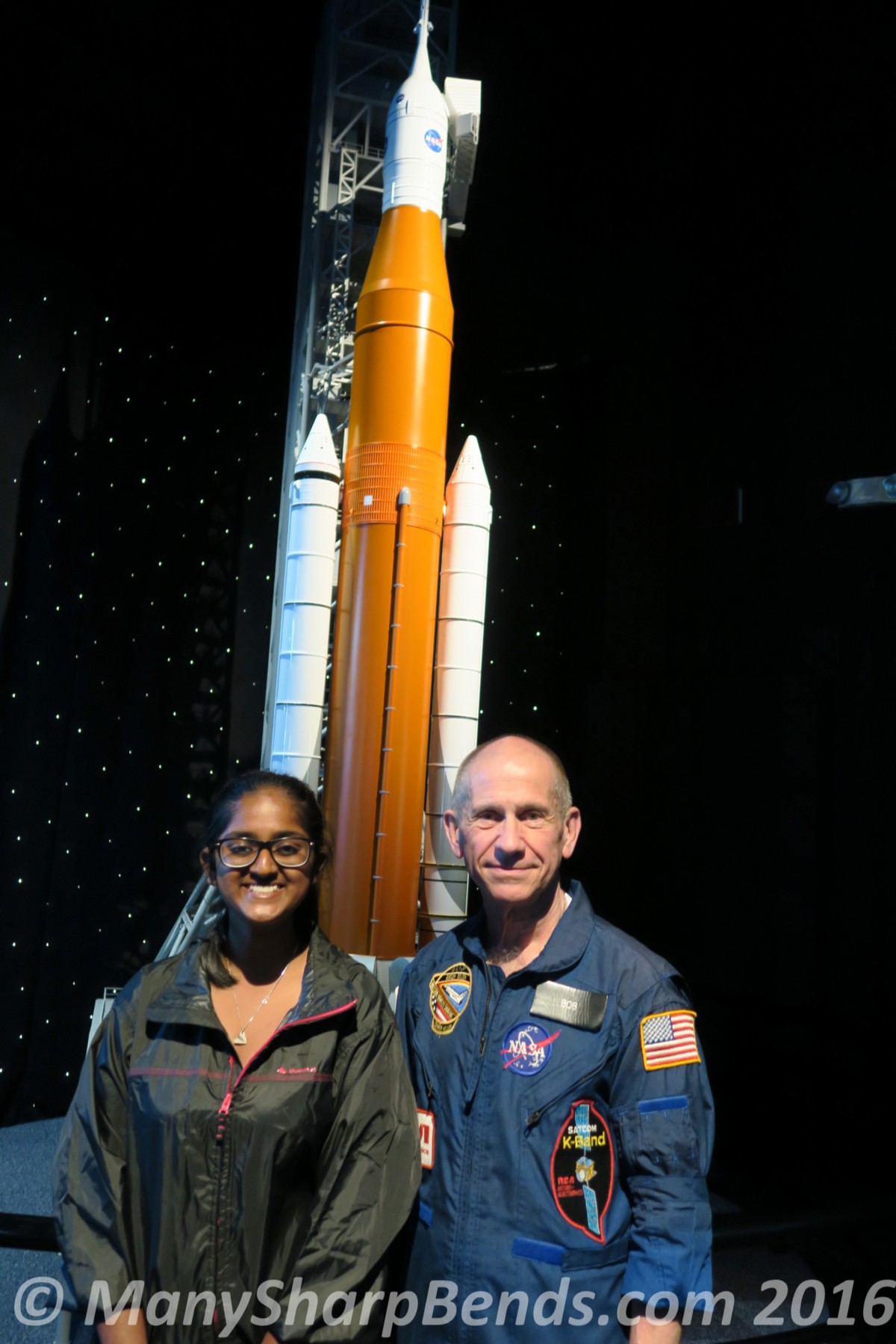
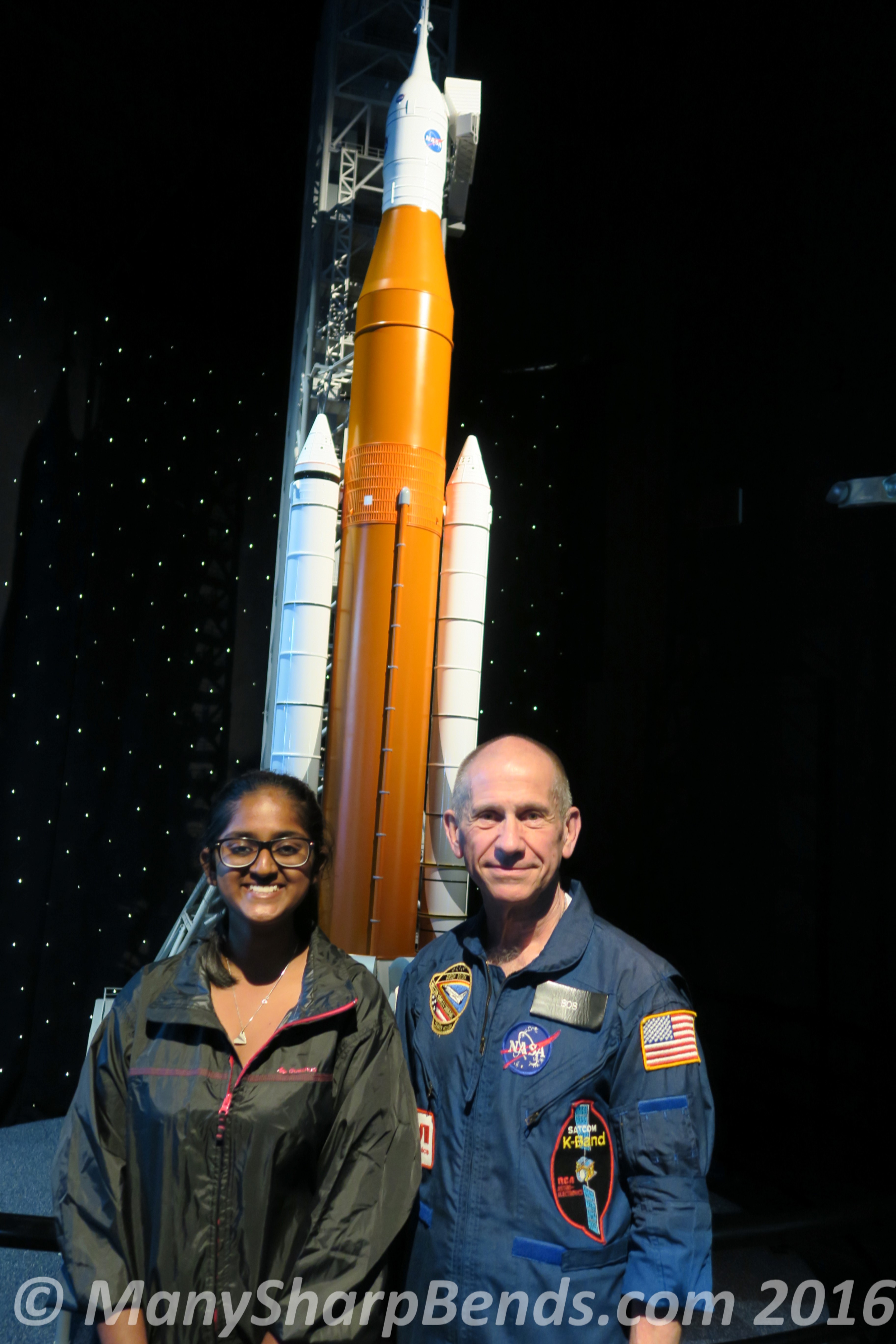
We were fortunate to have the opportunity to hear from and meet an astronaut, Bob Cenker, about his actual experience of being in space. He spoke about the physical challenges and his own experience of “space adaptation” and “re-adaptation” which is often termed as “space sickness” by the media.  His most beautiful memories he said are of “going through a rainbow” every sunrise and sunset, which happen once every 90 minutes while they orbit the earth!
IMG_1368
Mihika with Astronaut Bob Cenker, Mission Specialist 1986

Mihika had been asking us if astronauts got paid a lot and soon enough she had her answer when the question was posed to Bob who answered in the negative and explained how there were a huge number of applicants for the position of astronauts making it very competitive. Manish asked what disciplines should aspiring youngsters pursue if they wished to one day make it to space and happily for us his answer reinforced the importance of STEM (science, technology, engineering & medicine).

In very interesting 3D features, we learnt of the Hubble telescope repairs, the beautiful and intriguing images it has been sending, the discovery of galaxies, the setup of the International Space Station and the latest mission of NASA called “Orion” to send humans to Mars. That will be one lonesome mission for those who go – three years away from Earth, family, friends …..

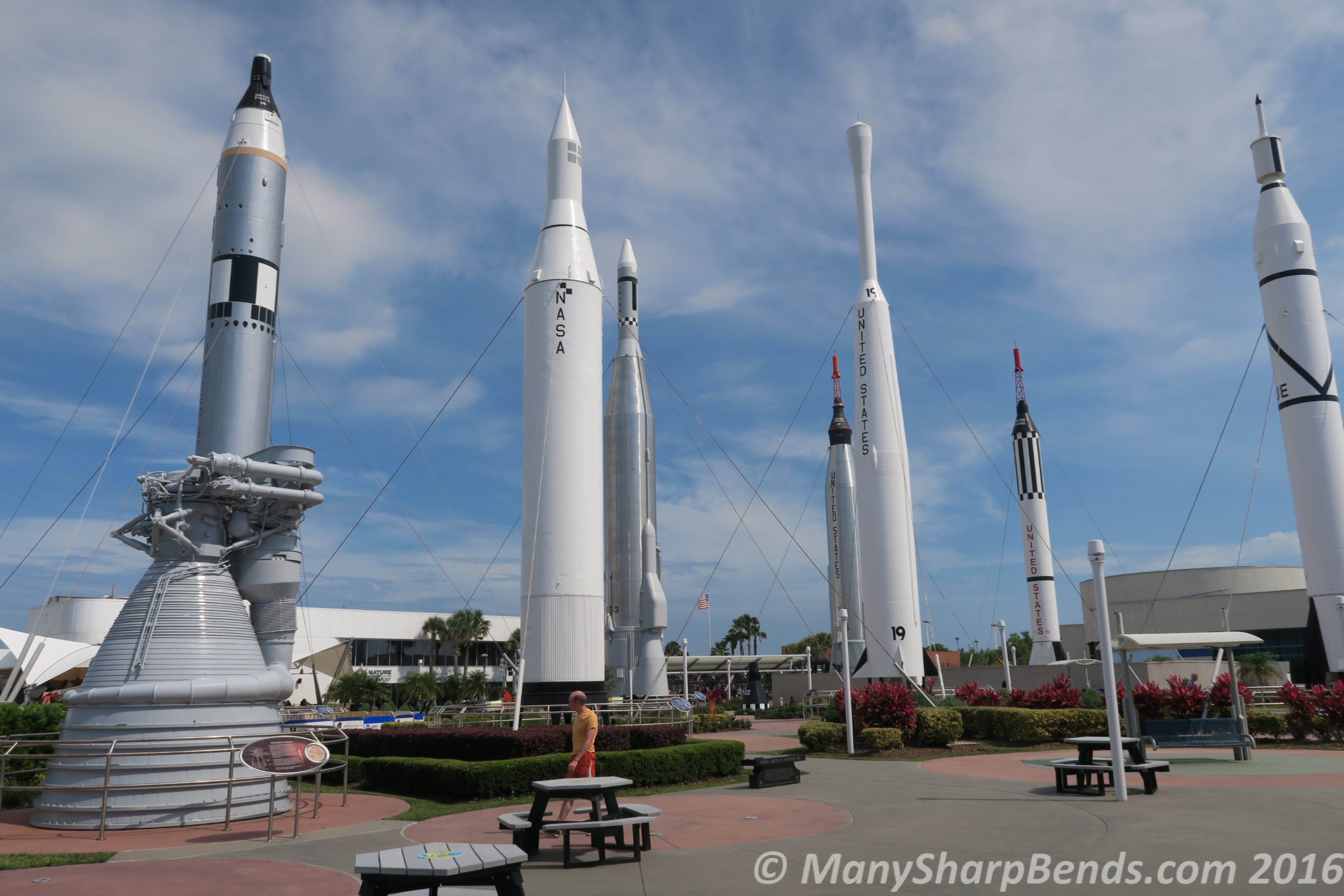
Wondering if space travel will indeed become a reality in our lifetime, we wandered into the Rocket Garden to see the impressive display there before calling it a day. And what a day!!
IMG_1370 IMG_1369

Thanks for reading!

Next up will be a most wonderful experience of nature’s wonders at the Everglades National Park in South Florida.
A Bite of The Big Apple: Midtown Manhattan

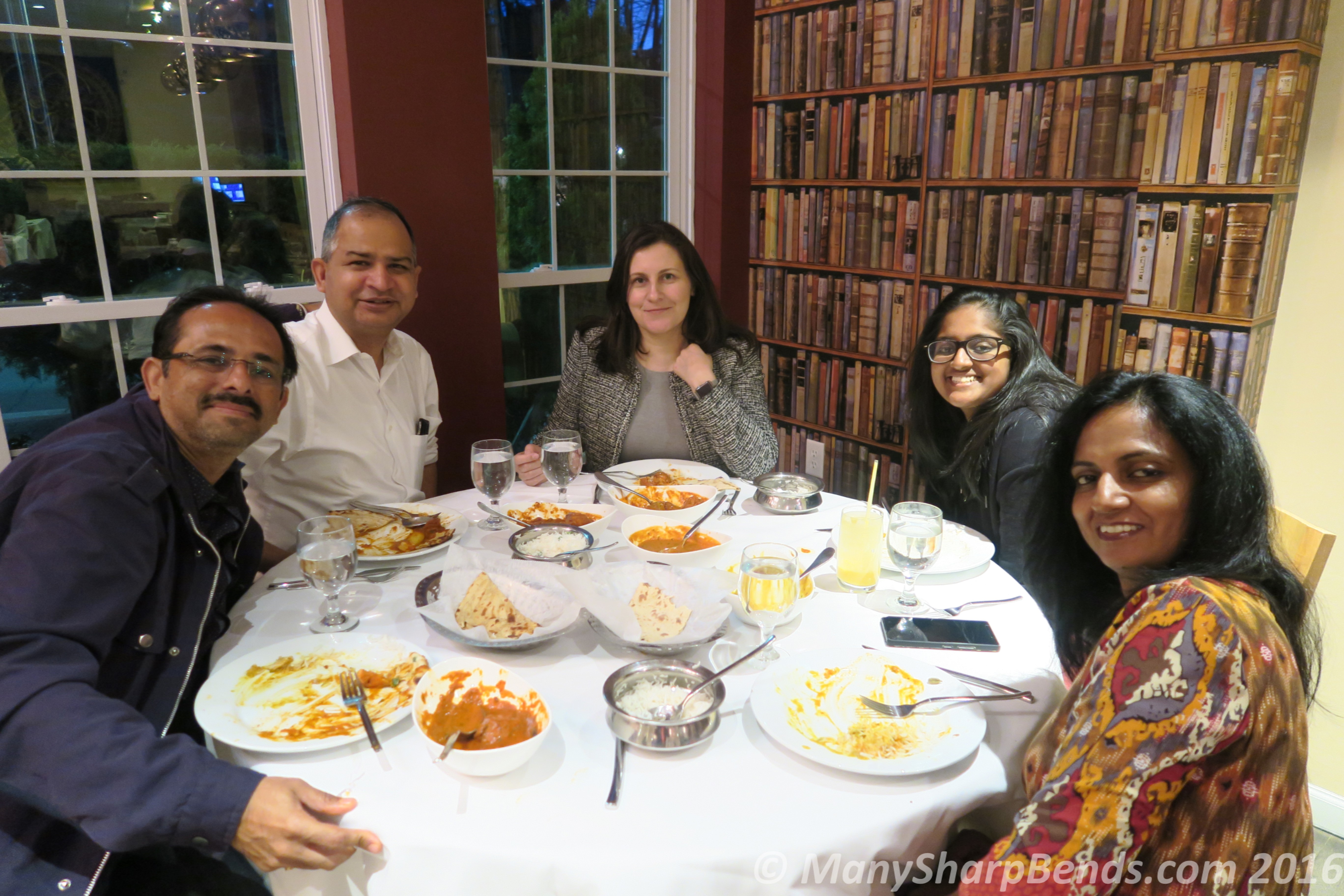
The forecast was for rain on the afternoon we arrived in New York, guess we managed to borrow some sunshine from Egypt for we arrived to a pleasant sunny afternoon. Warmer still the reception from an old buddy of Manish, Sanjay who was meeting him after 28 long years!! We had a great evening and dinner together with him and his lovely girl-friend Rodica.

Greenwich Dinner

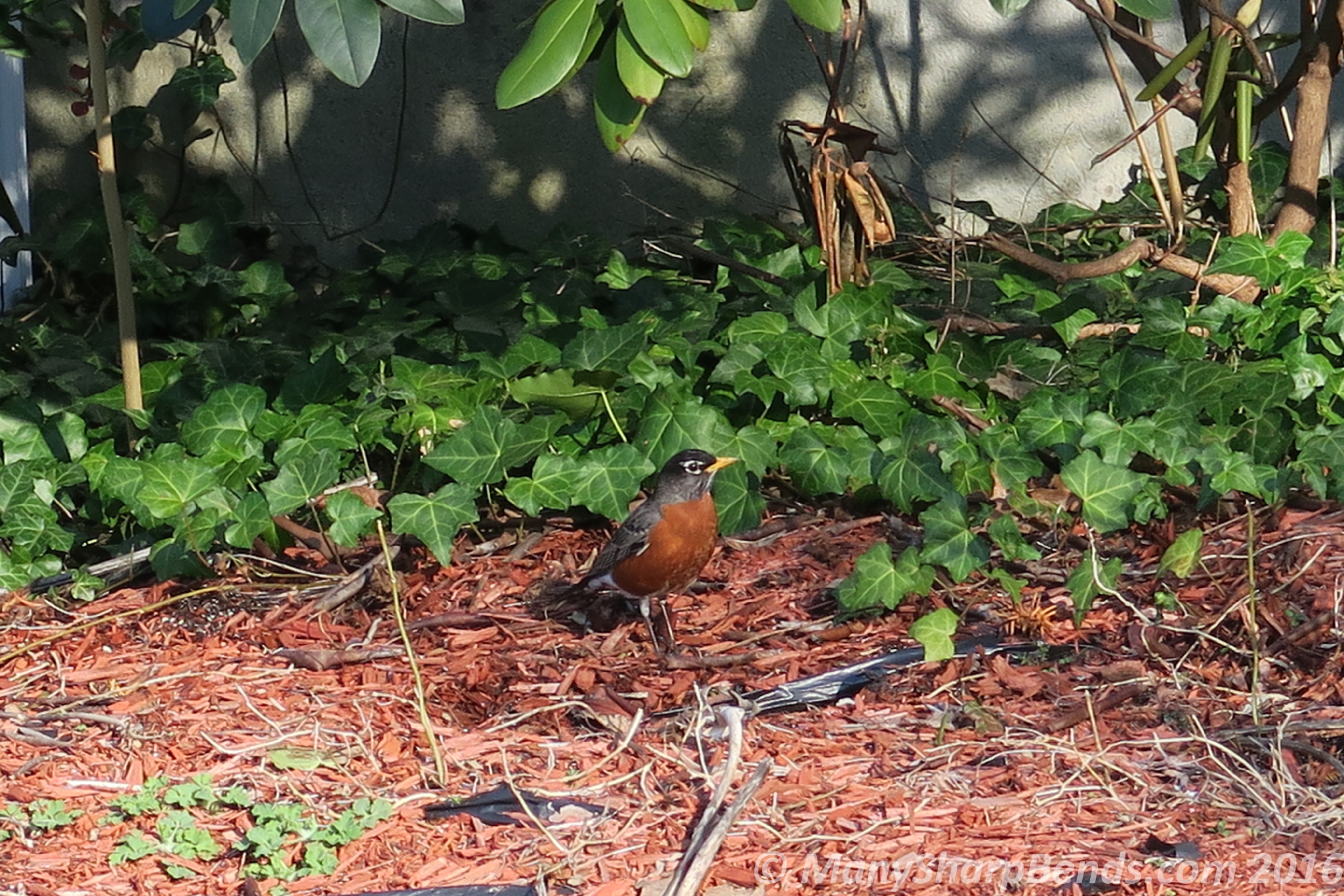
We took a day to recuperate before attempting a bite of the Big Apple, in which we explored the pleasant locales of Greenwich, a town in neighbouring Connecticut. The first to catch our attention were some pretty robins with a brownish-orange breast (later id’d as the American

American Robin - the state bird of Connecticut
American Robin – the state bird of Connecticut
An energetic squirrel!

Robin, the official state bird of Connecticut), squirrels darting up and down trees and the mynah-like but smaller Eurasian starlings.

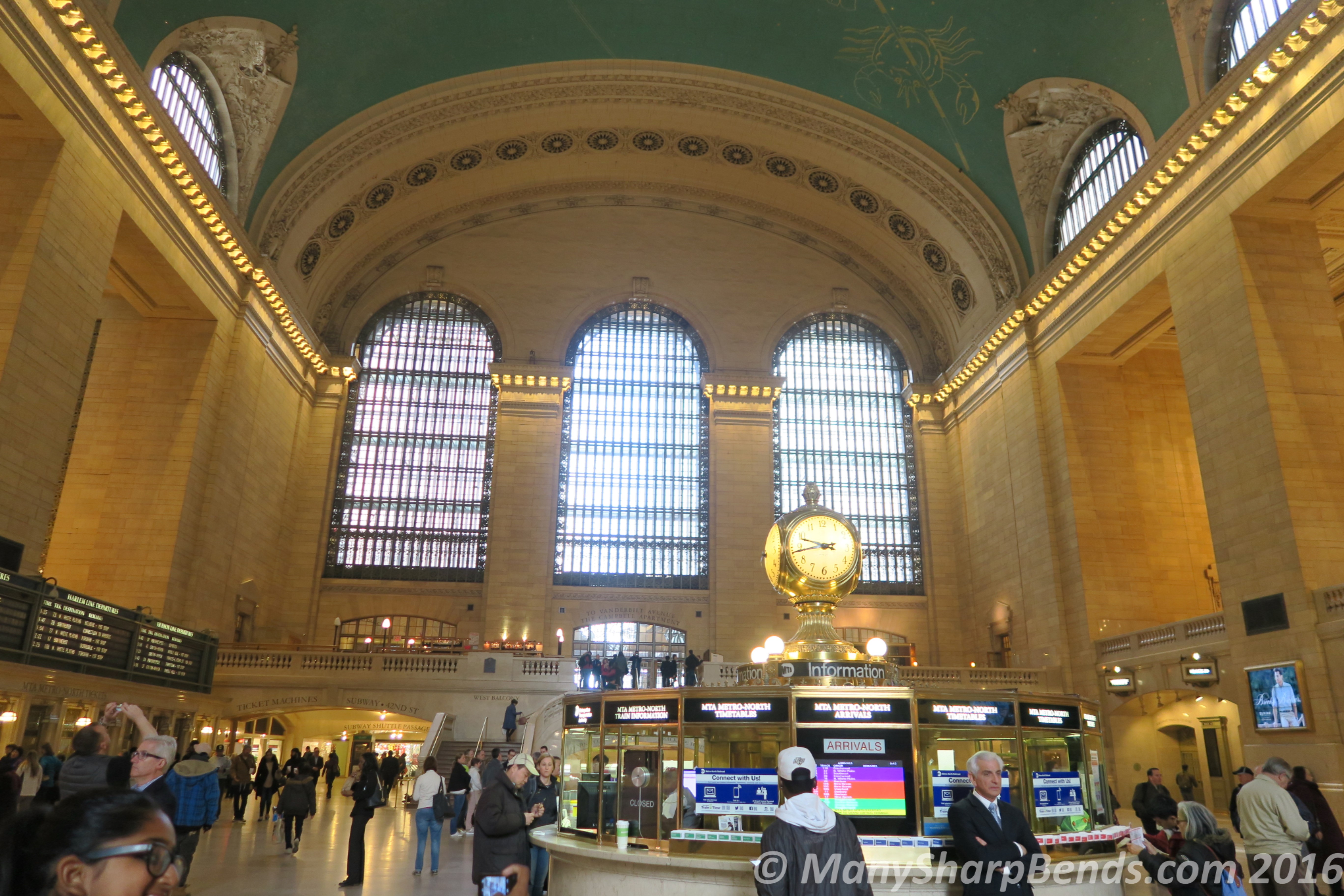
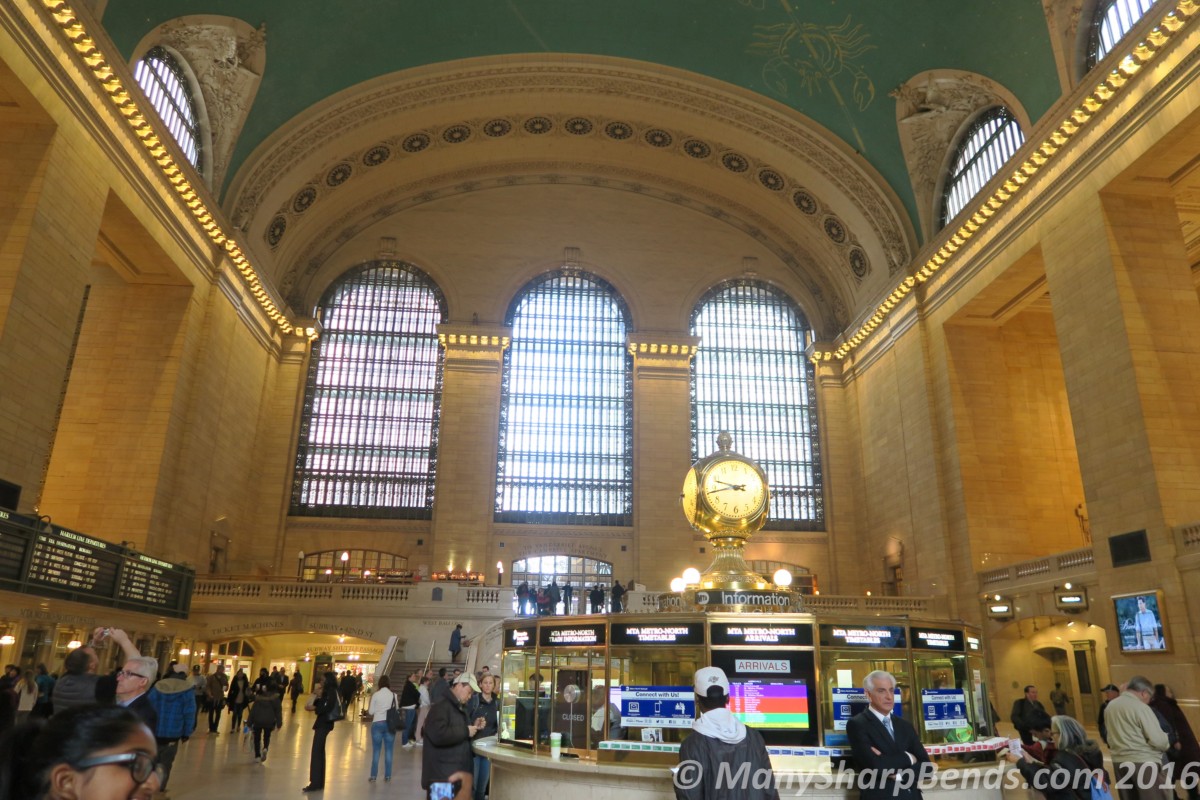
Acclimatised with the cooler weather and temperatures in Farenheit, we set out to explore the core of the Big Apple – midtown Manhattan. The name Manhattan has its origins in the word Manna-hata which in the Lenape language (of the natives who originally inhabited the area) means “island of many hills”. The famed Grand Central was our gateway and seemed only too familiar thanks to SRK and Rani Mukherjee in the movie Kabhi Alvida Na Kahna.

The Grand Central Station

Grand Central Exterior2

Grand Central Exterior1

Inspired by the bicycles outside the Grand Central and the lovely sunshine, we decided to explore as much on foot as possible.

Grand Central exterior3

IMG_0767

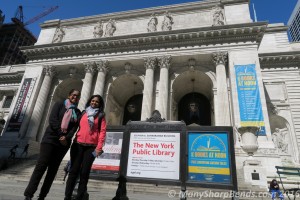
We made our way to the New York Public Library’s main building established in 1895 in Bryant Park. The walkway leading upto the building has many quotes on knowledge and books by eminent writers, thinkers, poets and artists; one could spend an hour or more reading them.

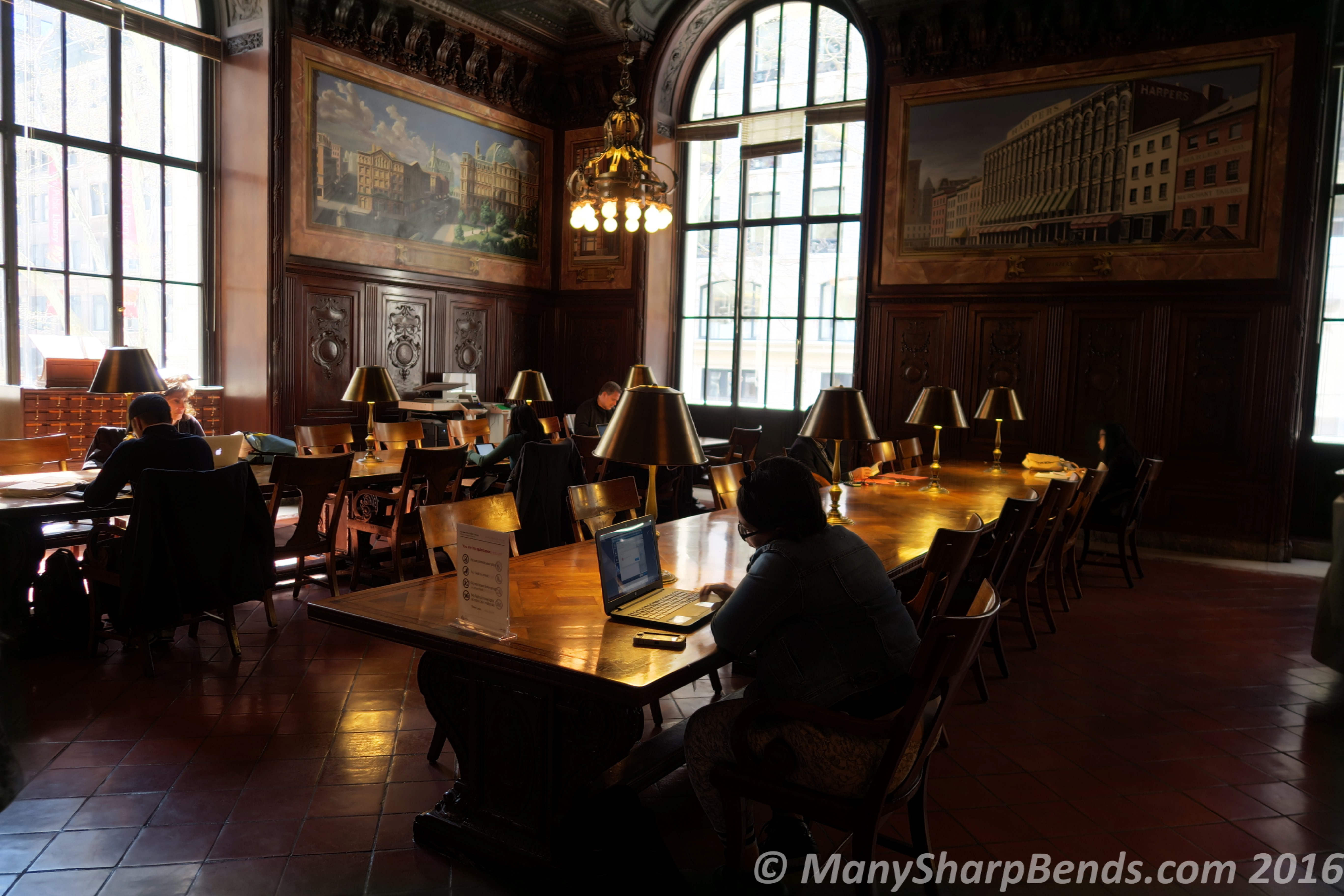
Inside are large reading rooms and halls that present an oasis of calm for those who wish to escape the hustle of the big city to read, think and work.

Peace & quiet in the heart of the city
The New York Public Library: Peace & quiet in the heart of the city

Just beside the library is the Bryant Park, which seemed to be eagerly awaiting the arrival of spring. There were no leaves yet on the trees but the flowers had just started blooming. We enjoyed the sunshine and watched people go by while resting our feet.

Bryant Park, Manhattan

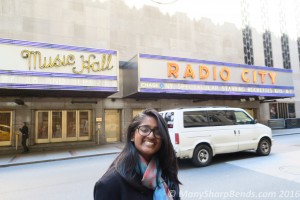
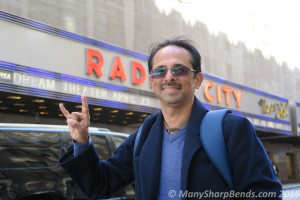
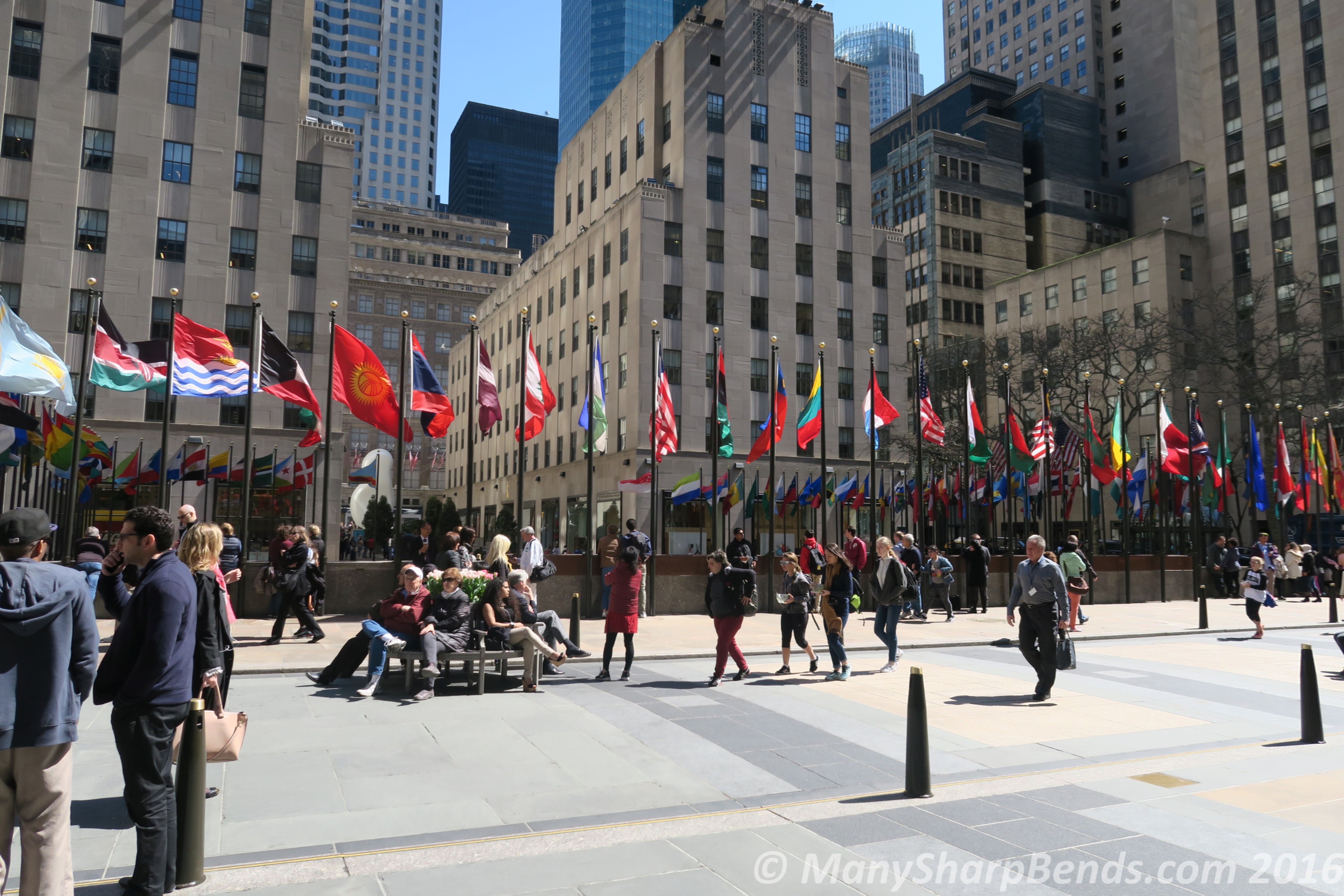
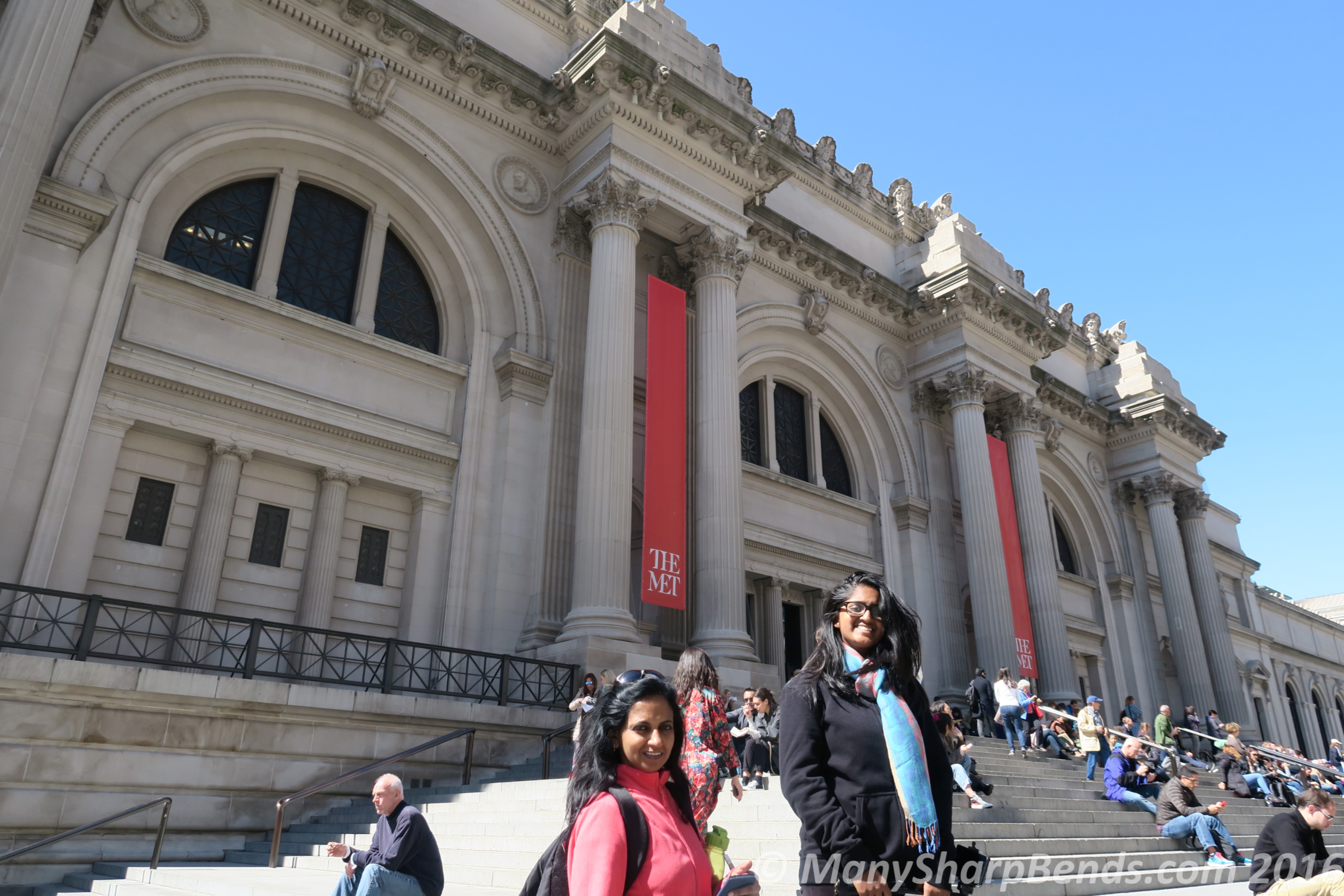
Next stop was “the MET“, the Museum of Metropolitan Art, the largest art museum in the US. Planned to be the main destination for the day, it lost out in time & mind-share owing to the bright sunshine which kept us outdoors for longer. For a family that likes to pace itself, we surprised ourselves by the ground we covered before we hit the Met – Times Square, the Radio City Music Hall and the Rockfeller Center.

IMG_0801

IMG_0810

Radio City Music Hall 2

Radio City Music Hall 1

The Rockfeller Center
The MET - the Metropolitan Museum of Art
The MET – the Metropolitan Museum of Art

The MET is a real treasure trove with galleries dedicated to art from across the world and spanning ancient to modern. One needs multiple visits over days to do justice to the collections here. We browsed through some of the key exhibits in the little over two hours we had before closing time. It was then time to rest our feet again, this time in the beautiful Central Park just adjacent to the MET.

The Central Park: a lovely lung space

To wrap up the day, what better place than a second visit to the glitzy Times Square, which in the not too distant past, would not have figured on the list of places for a family to visit. Fortunately for us, Times Square has witnessed a transformation from “dazzling to dirty and back again” and the efforts of some of the NYC mayors in the 1990s have changed the face of the Times Square.

IMG_0941
The Dazzling Times Square by evening

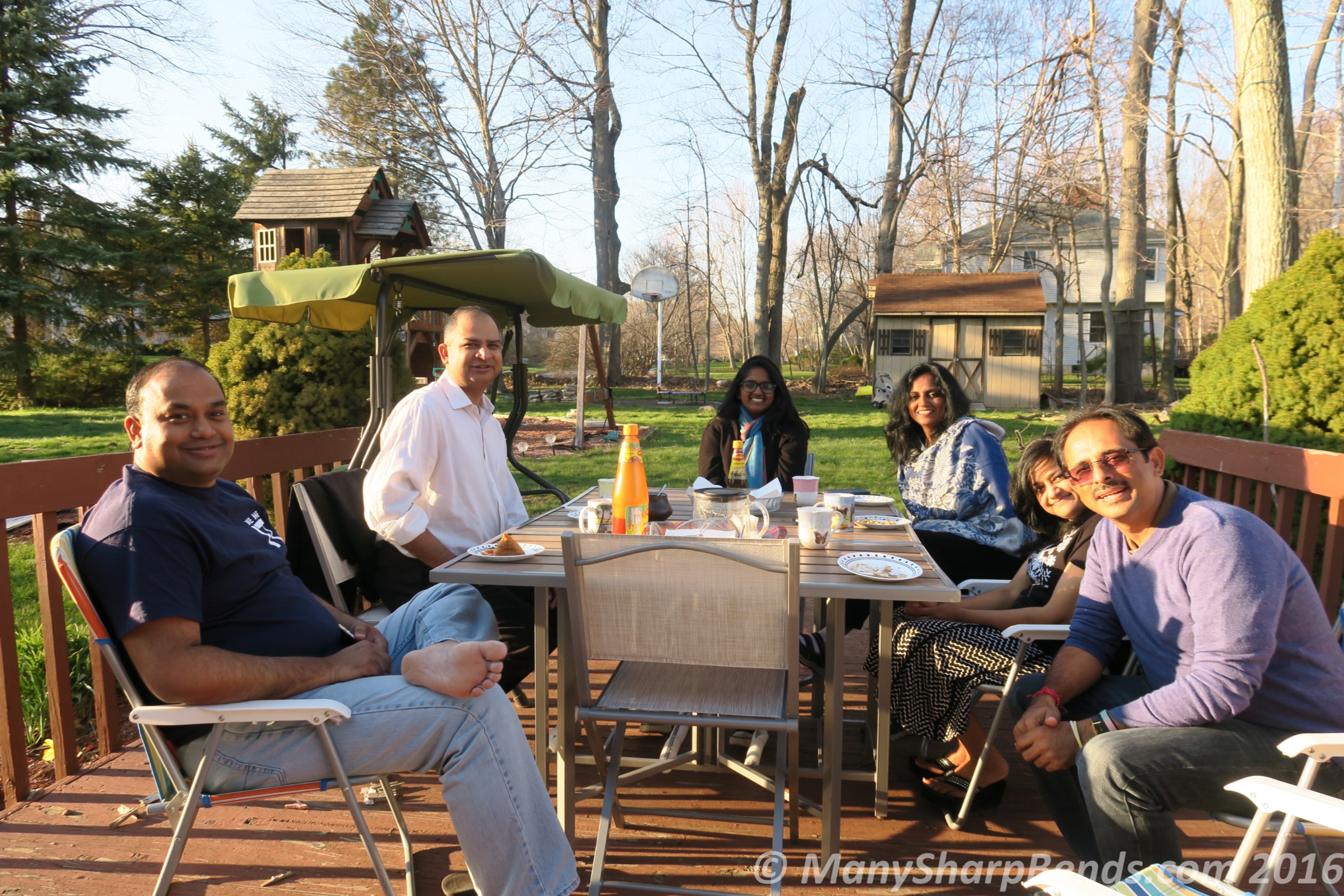
With the rest of Manhattan planned to be visited in our second visit a couple of months from now, the next day was spent in the company of another long-time buddy of Manish, Rajneesh and his wife Priti & son Ashwin at their home in Hartford, Connecticut. Priti’s sumptuous food had us licking our fingers for the next few meals!

Hartford

Thanks to our wonderful hosts, we got the opportunity to enjoy slices of nature at the nearby Manchester. We spotted a pair of Cackling Geese and a Heron on a nature trail by a little stream.

Cackling GooseHeron

Next pit stop was with family in New Jersey with my cousin Arun, sis-in-law Shweta and kids Atharv & Mira. It was a marvelous evening that was extra special for Mika for we dined at The Cheesecake Factory! The following day was a real treat with fresh home-made breakfast and lunch with filter coffee too!

IMG_1012

Well fed & satisfied, we were all set to head south to sunny Florida for some tweeny attractions for Mika at the Universal Studios and the much-awaited Kennedy Space Center for all of us.

Thanks for reading this, hope you enjoyed it. The next write-up will be on our visit to NASA’s Kennedy Space Center in Florida.

From the Old to the New Kingdom: The Temples & Tombs of Luxor


The dawn of 10th Apr saw us taking a peaceful morning walk on the beautiful Nile Corniche with the chirping of sparrows (so glad to see hundreds of them wherever we went in Egypt) to keep us company as we headed to the Karnak Temple 3 km away from our hotel.

IMG_0460

We made an early start to beat the heat of the day and the hordes of visitors who would descend post their breakfast. Though it was not the peak tourist season and hence in general not too much of a crowd at any time, we preferred the luxury of having these amazing historical sights almost entirely to ourselves by getting there as close to opening times (6 am in Luxor) as possible. It certainly helped that we lived across the road literally both at Giza and Luxor, choosing clean & modest accommodations over the more comfortable downtown places we are otherwise used to.

Luxor, like Cairo, in the ancient times, had the two banks of the Nile used for distinct purposes – the East with its sunrise was the land of the Living while the West where the sun sets was the destination for those making their way into the After-Life. So the temples are of worship are located on the East bank while the West bank houses the tombs and memorial / mortuary “temples” built for the departed.

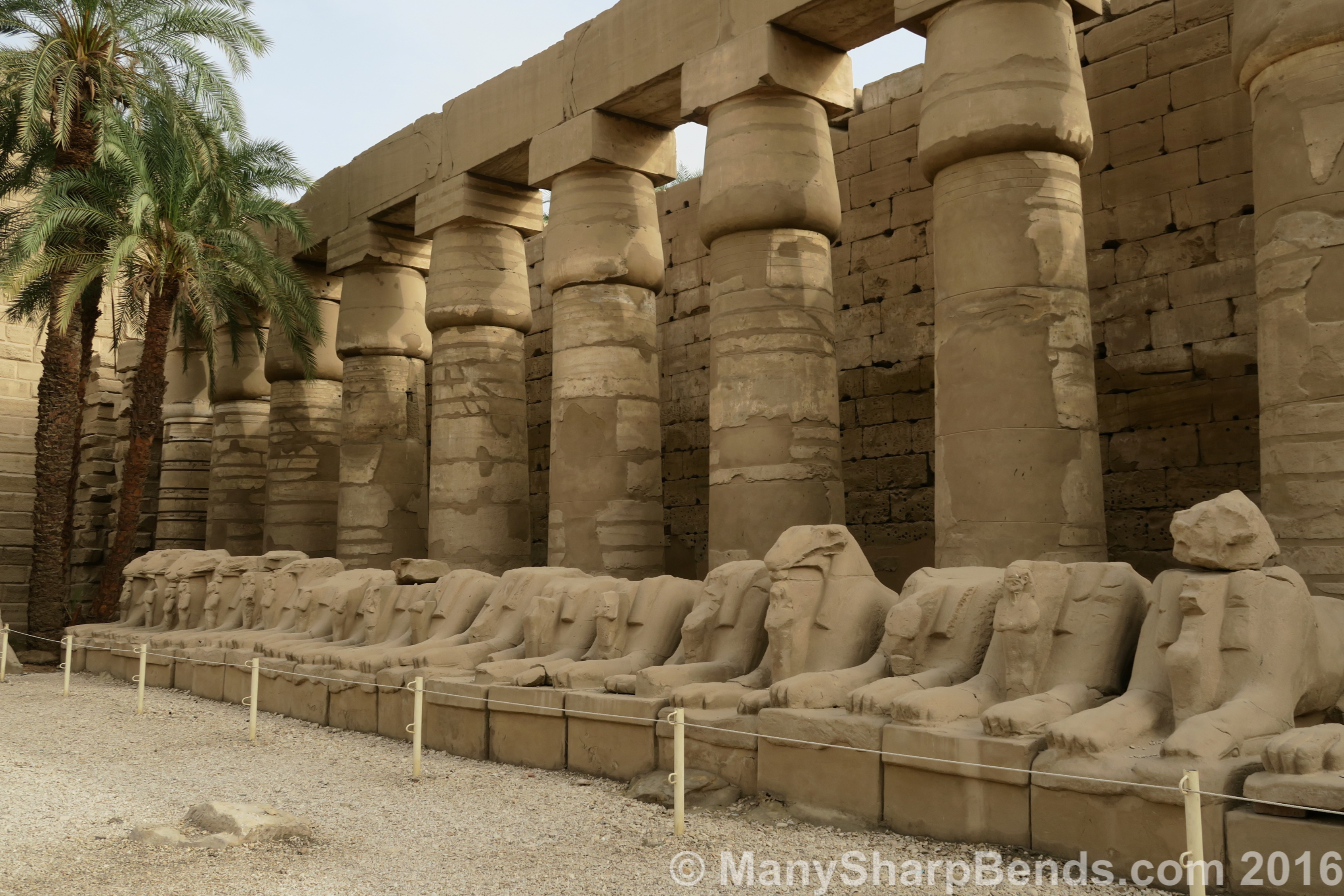
We had read about the magnificence of the Karnak Temple, but seeing it in person left us awestruck and wondering at the splendour & grandeur that had been achieved over 3000 years ago! Entering through an avenue of ram-headed Sphinxes, we found ourselves in a large courtyard with tall pillars and statues and leading into altars on the two sides.

IMG_0481IMG_0483

The Karnak Temple was dedicated to the reigningIMG_0486 deity of Thebes (the
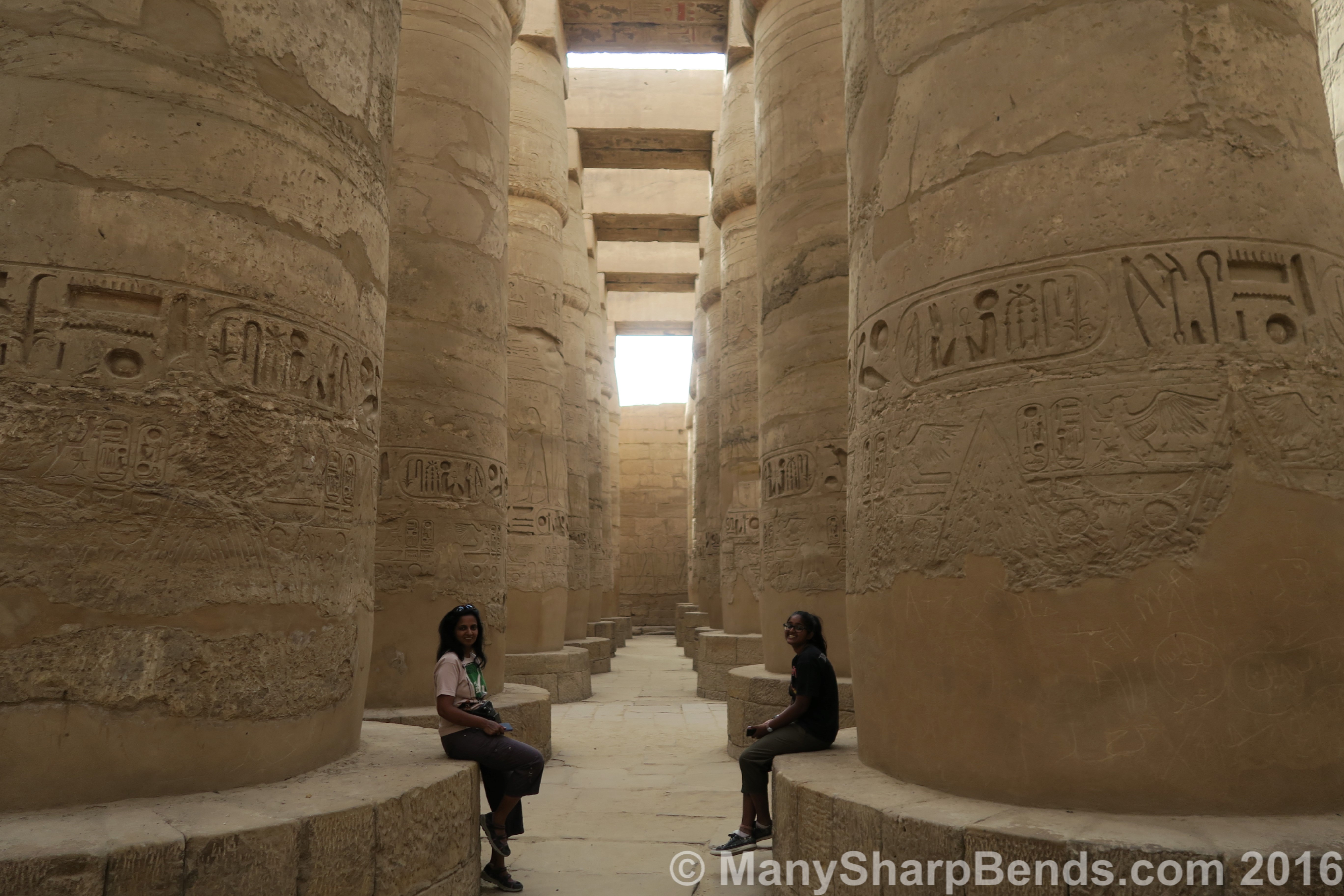
region) Amun, his wife Mut and their son Khonsu, referred to as The Thebian Triad. The highlight of this massive temple complex (for us) was the huge Hypostyle Hall, large enough to house London’s St. Paul’s Cathedral & Rome’s St. Peter’s Basilica together. It has an array of massive 25+ meter high pillars each of which is engraved with various symbols of ancient Egypt. There are 2 distinct patterns of engravings on the 2 sides, attributed to the 2 Pharaohs responsible for their construction, with pillars on each side being exactly identical!

IMG_0505

IMG_0514

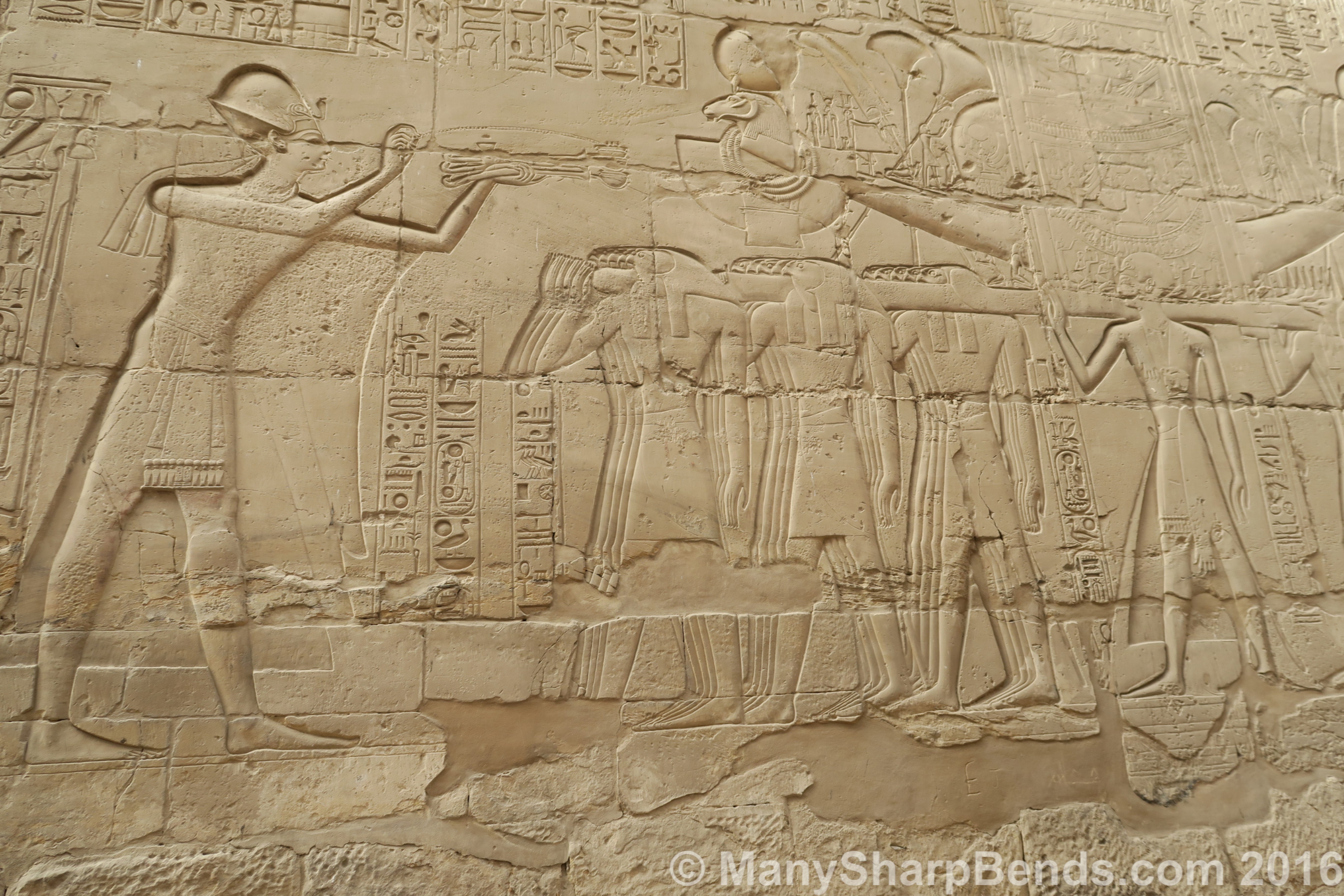
The walls of the hall are engraved with detailed scenes of rituals of offerings and processions. Looking up, one can still see the remnants of the bright blue and red colours that once adorned the pillars and ceiling. What would this place have looked like in its heyday ?!!

IMG_0513

IMG_0508

Beyond the grand hall we see two obelisks, Egypt’s tallest at 30 meters. It was erected by Queen Hatshepsut, one of the rare women rulers of ancient Egypt, to the glory of her “father” Amun (the deity of Thebes). We wandered through the rest of this massive temple complex, to see more halls, altars and the inner core, the original sanctum of Amun which is perfectly aligned in the East-West direction.

The tourist buses have now begun to arrive and we exit, in an antique taxi, to head back to the cool environs of our hotel for breakfast and escape the heat wave that continues to grip Egypt.

IMG_0543

In the evening it was hop, skip & jump across the road to the Luxor temple and the Avenue of Sphinxes. This is not a temple of worship and was probably used for coronation ceremonies, besides an annual procession of the deities from the Karnak temple.

IMG_0552

In what may have been akin to the chariot festivals a.k.a “Rath Yatra” / “Ther Thiruvizha” still held in some temples in India, the deities of Karnak temple were brought to the Luxor temple in an annual procession through the Avenue of Sphinxes that connected the two temples.

IMG_0545

What remains now is a very small portion of the 3 km stretch lined with Sphinxes, with the city getting built over various parts. A lone Sphinx can still be seen here & there as one traverses the town.

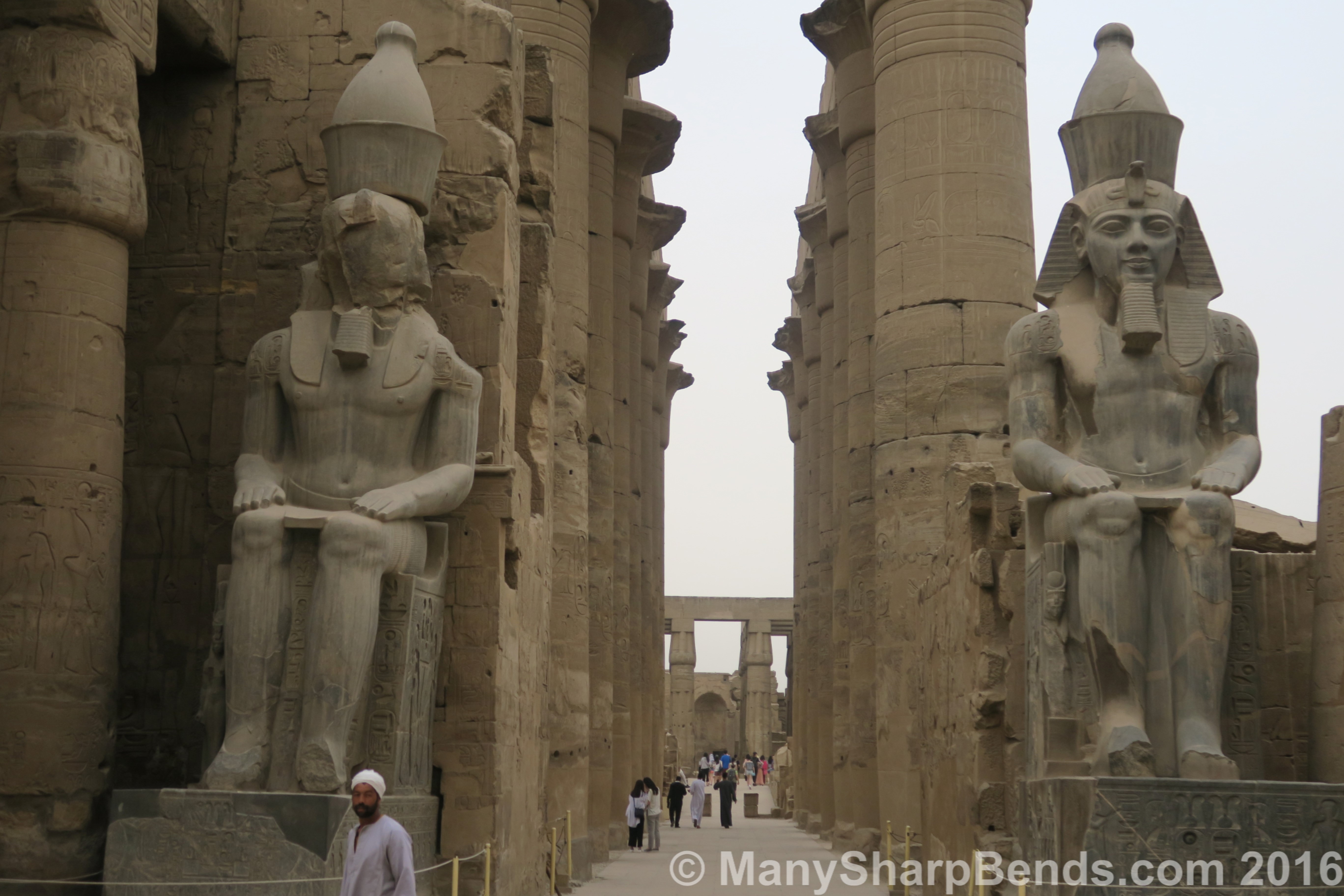
IMG_0553 The Luxor Temple, though smaller in scale than Karnak, is characterised by similar large courts, hypostyle hall, larger than life statues and grandeur that were characteristic of this great civilisation.

The temple IMG_0563was built and extended over years by various kings and completed by Tutankhamun. A statue of him with his wife Ankhesenamun can be seen in the temple.
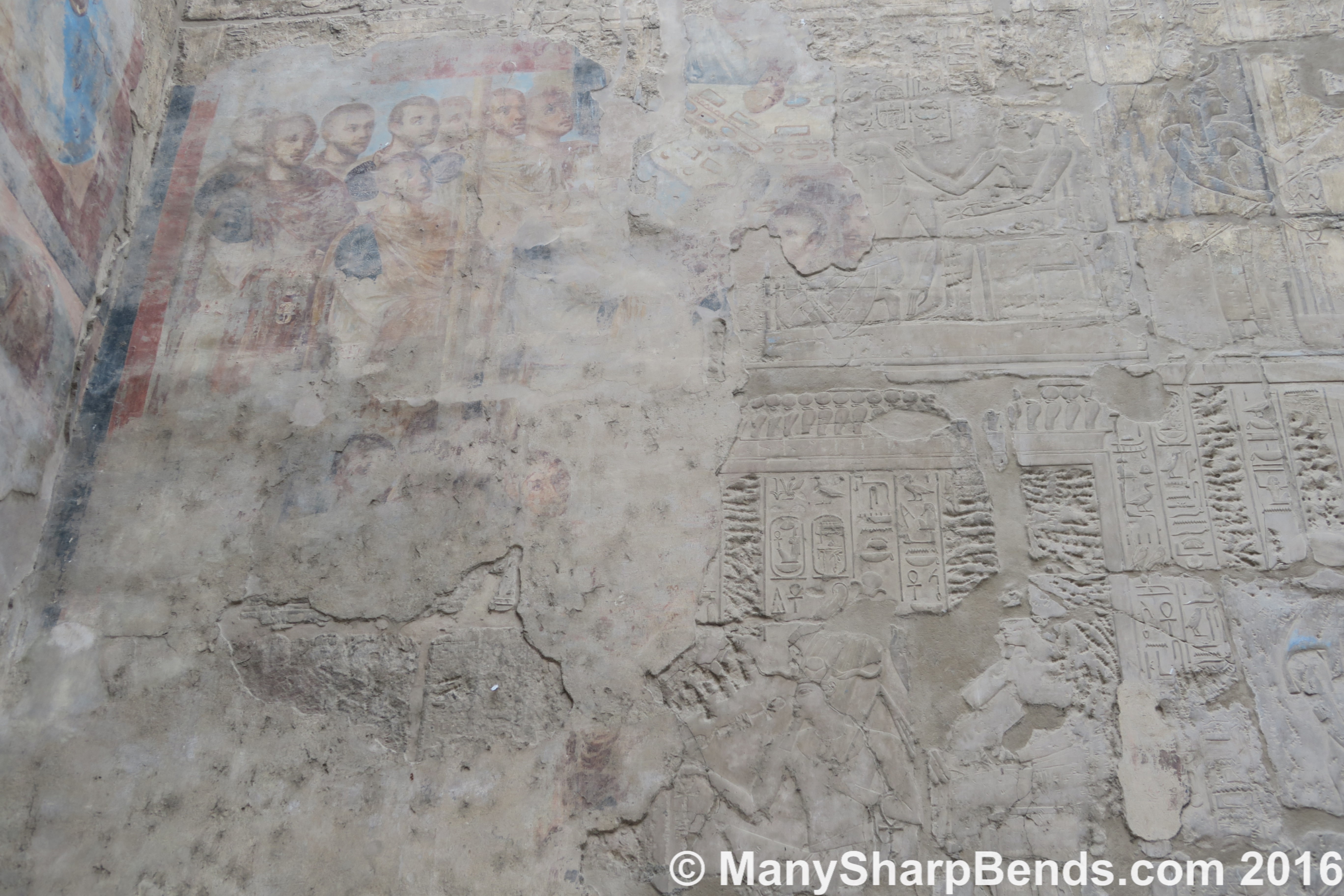
The Temple was converted into a fortress by the Romans when they occupied the area much later around 250 AD. In a bid for their own claim to fame, the Romans painted over some of the walls and used the altars as chapels. The Roman painting is visible in a corner of the wall – note the top left corner in the picture below.

IMG_0558

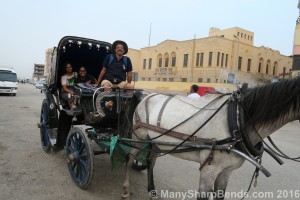
A lot accomplished in the day on the East bank and IMG_0580having braved the hot dusty breeze that persisted even at sunset, we wound down with a horse cart ride and a dinner on the rooftop. Manish braved the gusts of wind that started up as we finished dinner to revisit the temple to see the night lighting. Mihika & I chose to admire it from a distance!

Next up on our list for the West bank are the Valley of Kings, the Hatshepsut memorial temple, Medinet Habu and Colossi of Memnon.

A historical perspective – As we move in time from the Old Kingdom of Lower Egypt (Dahshur, Saqqara, Cairo) through the Middle Kingdom and to the New Kingdom of Upper Egypt (Luxor to Aswan), the Pharaohs moved from building pyramids to carving out & decorating their would-be tombs in the pyramid shaped Thebes mountain on the West bank of the Nile in Luxor. The kings are buried in the Valley of Kings, the queens in the Valley of Queens and the aristocrats in the Tombs of the Nobles. The workers who built the tombs also had a place designated for their own tombs, the Deir al-Medina.

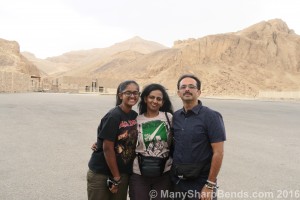
It was an early start and we were pleasantly surprised by the cool morning, cloudy and with a drizzle! What a relief after the heat wave, we IMG_0618couldn’t have asked for better weather for this day of intense sight-seeing. Crossing over the Nile, we drove up the Thebes passing a few sharp bends (!!) to get to the Valley of the Kings.
IMG_0623

There are 8 tombs that are open to the visitors on any given day (and these can be different) and one can choose any 3 to explore from the inside. The first one we chose was Merenptah’s, the 13th son of the great Ramesses II, who finally got a chance to rule after 67 years of his father’s reign while his 12 older siblings had no such luck! We chose this as it is reputed to be among the most beautiful of all in the Valley of Kings.

Tomb-building had become more elaborate with time and unlike the older pyramids where we had to bend and walk single-file through a tunnel to get to the sarcophagus, here we have wide passages with high ceilings to walk down comfortably. Just as well, as the tombs are built quite deep inside with at least a 100 steps to climb down. The walls and ceilings of the passage and the rooms inside are all elaborately decorated with the Egyptian Book of the Dead to guide the soul on its journey to the afterlife. No photos are allowed in any of the tombs here, so sorry can’t share the beauty we witnessed inside.

The next 2 choices were Horemheb and Tuthmosis III, the former being a General who went on to become the only Pharaoh of non-royal origin and the latter famed as the Napoleon of Egypt. Tuthmosis III’s tomb is unique in the way he built it – high up between 2 hills and across a ravine, with many tunnels and false doors – all to keep it safe from the tomb raiders who the Pharaohs dreaded. A visit to his tomb is breath-taking, literally that is, with having to first climb up about 4-5 floors worth of steps and then down about 5-6 floors. Needless to say, you need to climb up & down to get back out!

Our morning exercise more than taken care of, we headed to the Hatshepsut Temple, a beautiful piece of architecture that looks like its been carved out of the mountain. Hatshepsut was the most important of all female Pharaohs (there being less than a handful of them throughout the dynastic rule) who ruled for nearly 15 years when she became a widow.

1460374276858

Climbing up past the vast open court, 1460374273758we came face-to-face with the huge statues of Osiriform Hatshepsut, only a few of the original 24 remain now. The walls in the halls a level below have painted depictions of the divine birth of Hatshepsut and her expedition to the Land of Punt, an exotic country on the Red Sea coast to get plants needed for incense-making and other trade.

The tIMG_0635emple houses a sanctuary of Anubis, the jackal headed God of mummification and afterlife. Here is a relief depicting Anubis that has survived on the temple walls. The ceilings 1460374274794here have the familiar “shower of stars” – see the golden stars set against the night sky backdrop here.

The next monument we visited and nearly the last for the day was Medinet Habu, the mortuary temple of Ramesses III. Built in the style of a Syrian fort, it has well preserved reliefs and pillars.

IMG_20160411_114723  IMG_20160411_114448

IMG_0655        IMG_0642

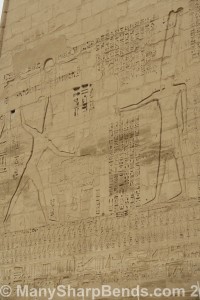
We found the depiction of Ramesses II riding his chariot quite striking. A pigeon was perched in the centre, on horseback when we clicked!

IMG_0658

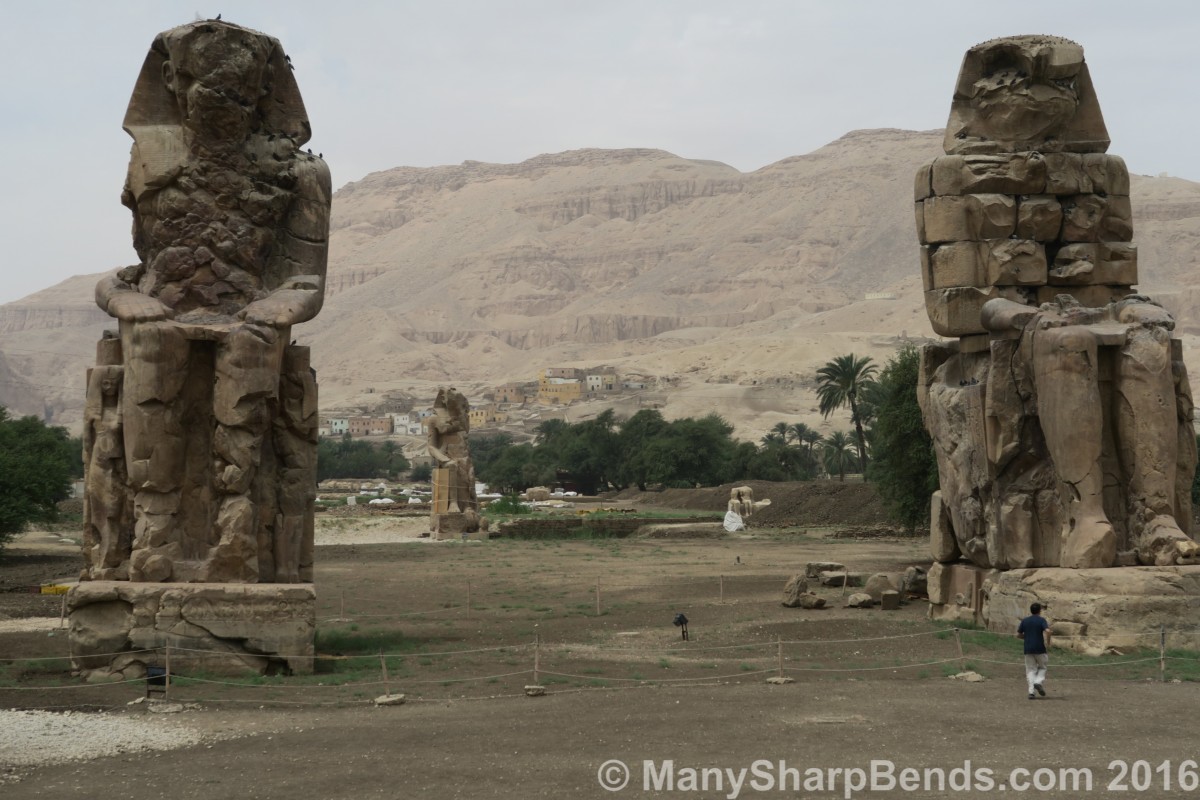
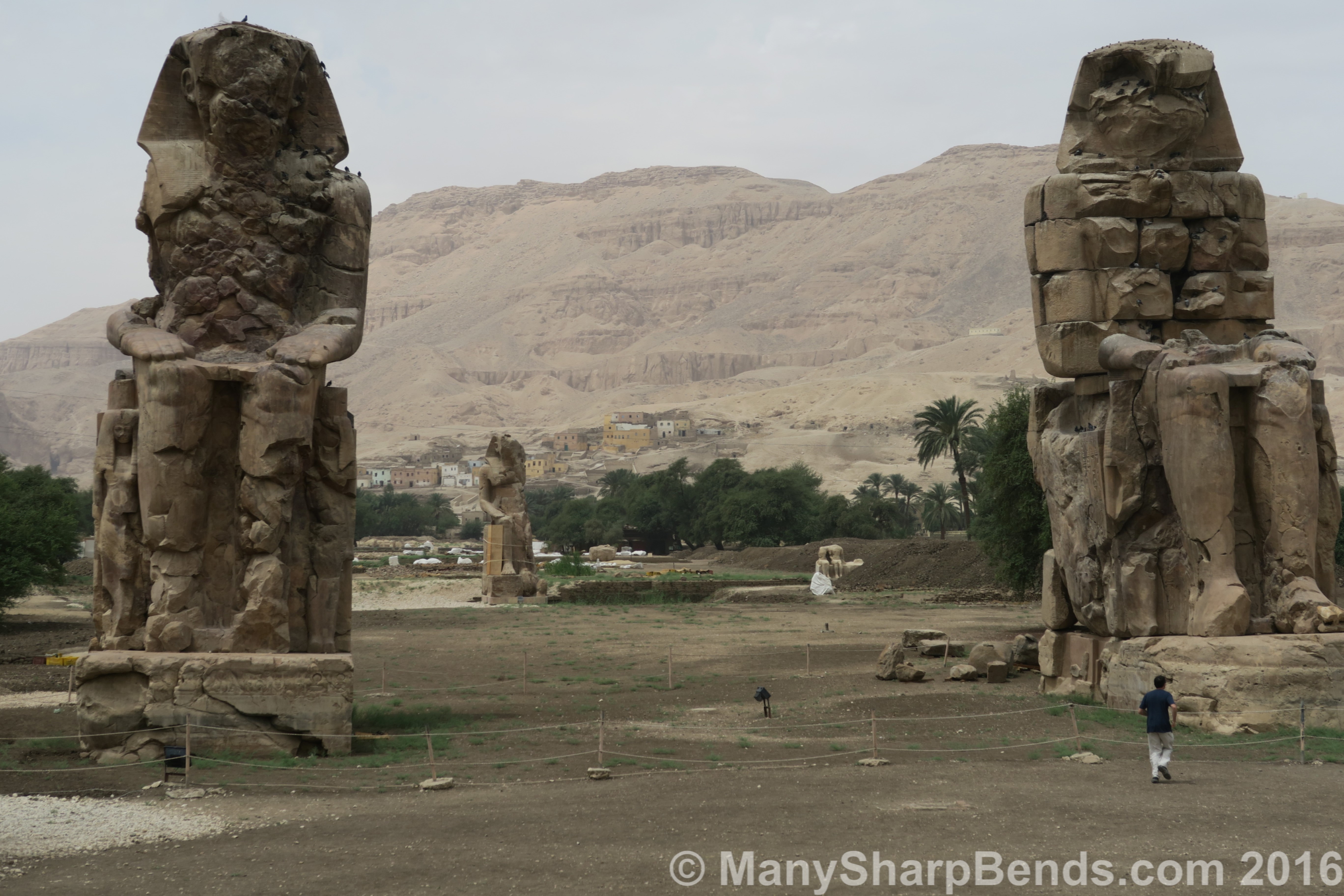
On our way back we stopped by the landmark Colossi of Memnon, the giant twin statues of Amenhotep III.

IMG_0661

We crIMG_0672ossed back over the Nile to come home to a lunch with Egyptian Sakara beer and local veggie and chicken to fill our starving selves before a nice afternoon nap, all the time thanking our lucky stars for the pleasant cool morning that made it possible for us to cover so much ground. In the evening, we were finally rewarded with a beautiful sunset over the Nile (not having had any before due to the storm dust hanging in the air). We took a felucca (wooden sailboat) ride for a quiet evening to mark the end of our Egyptian sojourn.

IMG_0674   IMG_0685   IMG_0686

Much to Mihika’s delight, she found an antique PBX with a dial-pad at the hotel reception that evening and it was fun to tell her hIMG_0690ow we dialled numbers on telephones in the days when we were growing up.
Thanks for reading this rather long post! We had the envious task of giving you a glimpse of human feats achieved over a 2000 year period!!

Keep following and encouraging us … as we move to the next continent(North America) on our itinerary ! Also keep reading Mihika’s blogs at www.iammihika.com


(Don’t) Ride Like An Egyptian!!

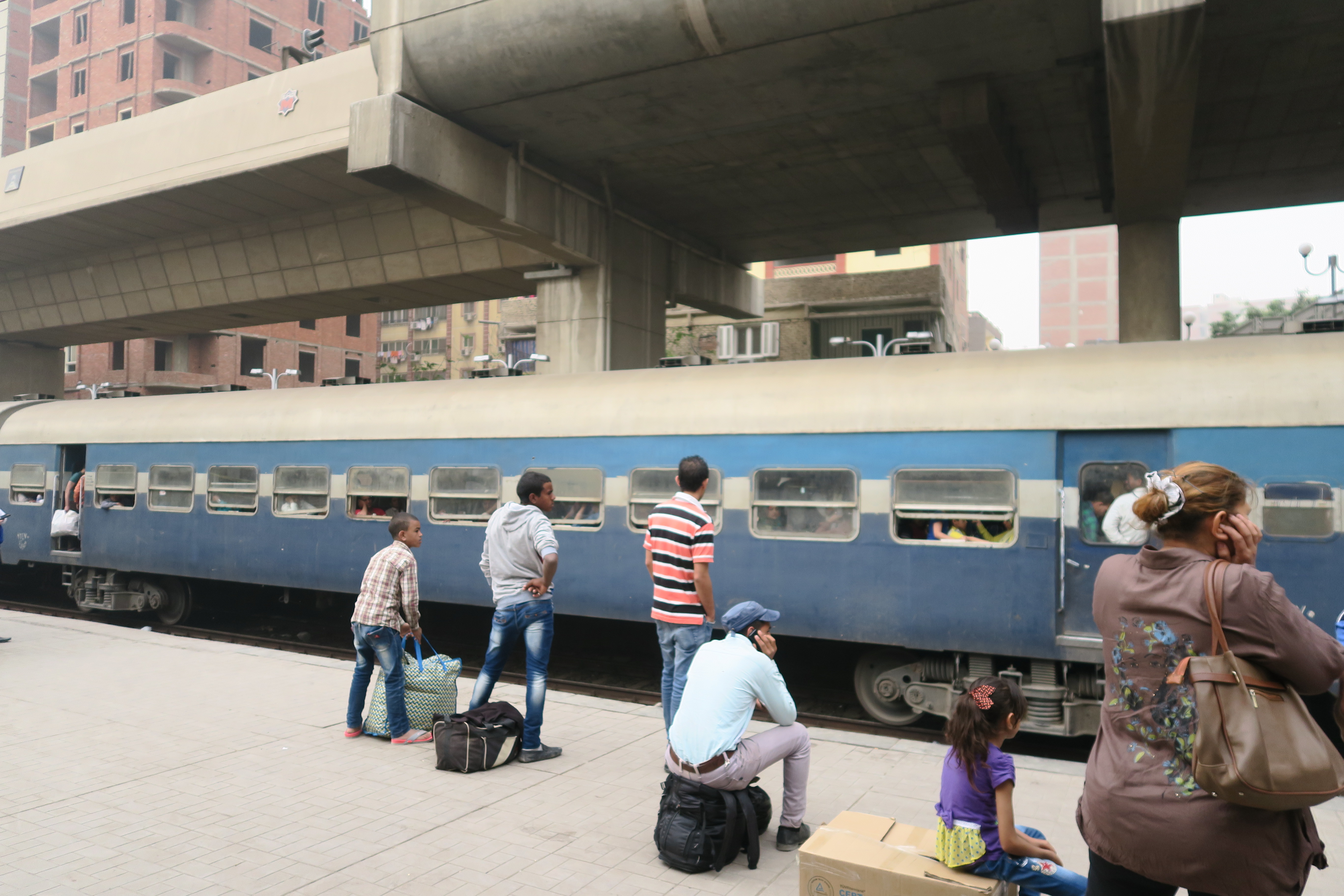
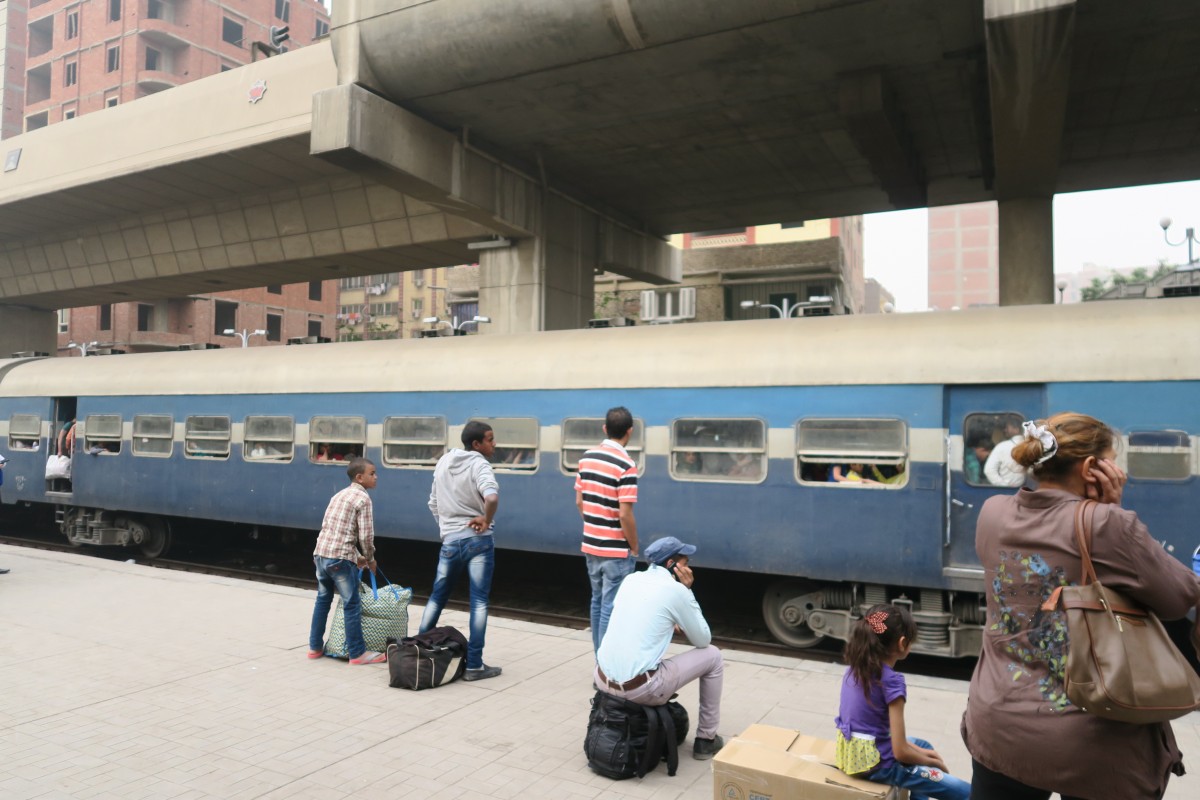
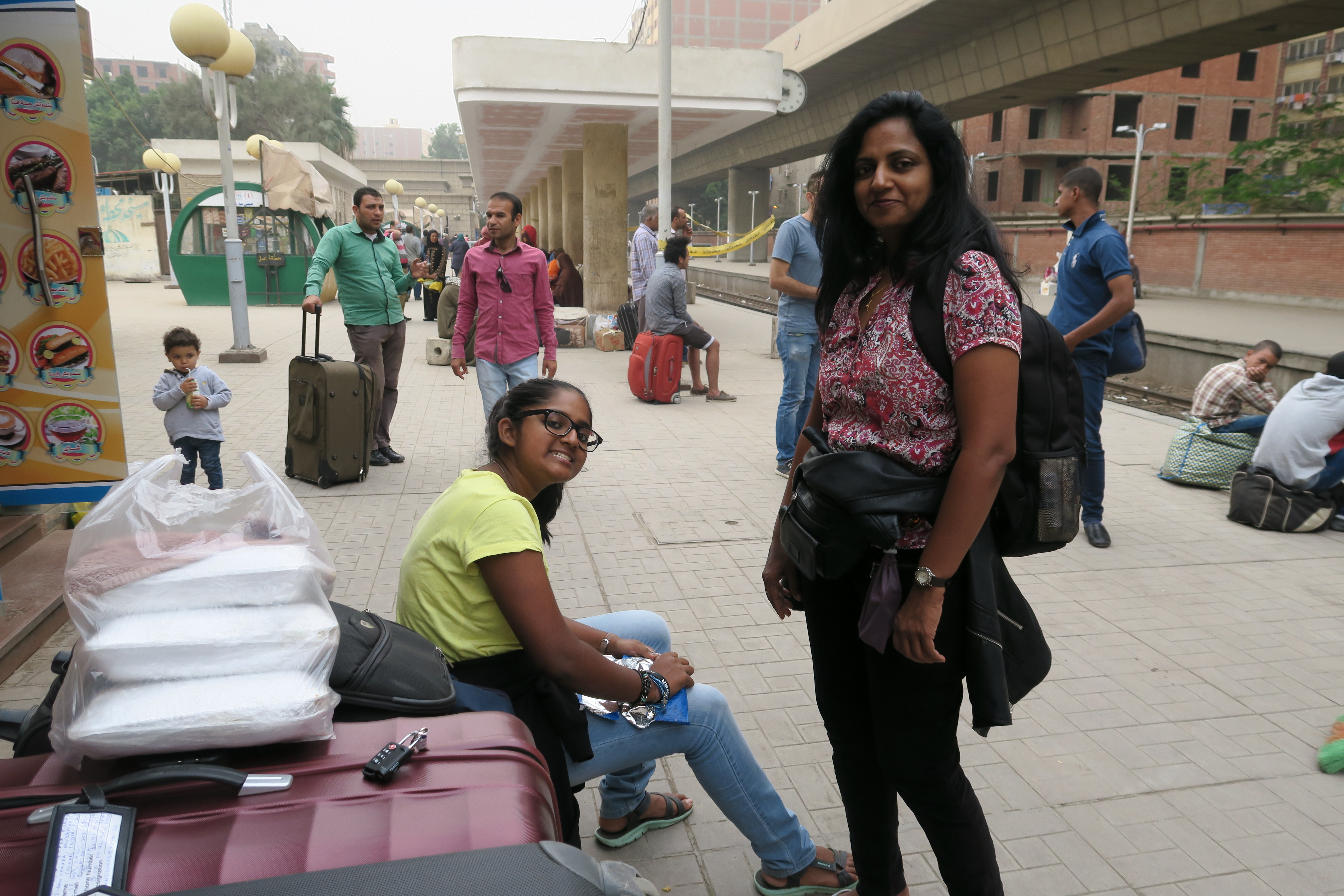
While we were having a tête-à-tête with the Royal Mummies, Cairo was gripped by a heat wave and a desert storm brewed overnight threatening to jeopardize our travel to Luxor the next morning (9th Apr). Fortunately it blew over with dust on our luggage (indoors with all windows closed!!) being the only damage and we set out for the Giza train station. We reached well in time but despite all the preparation of master planner Manish, there were a few significant obstacles to cross before we could get ourselves & our bags and baggage onto the platform of what seemed like a small Indian town from the 1970s/80s – no signs outside the station, a sandy non-paved entrance, no displays of what train on what platform. Fortunately the platform itself was nicely paved and quite clean!

IMG_0453

IMG_0454

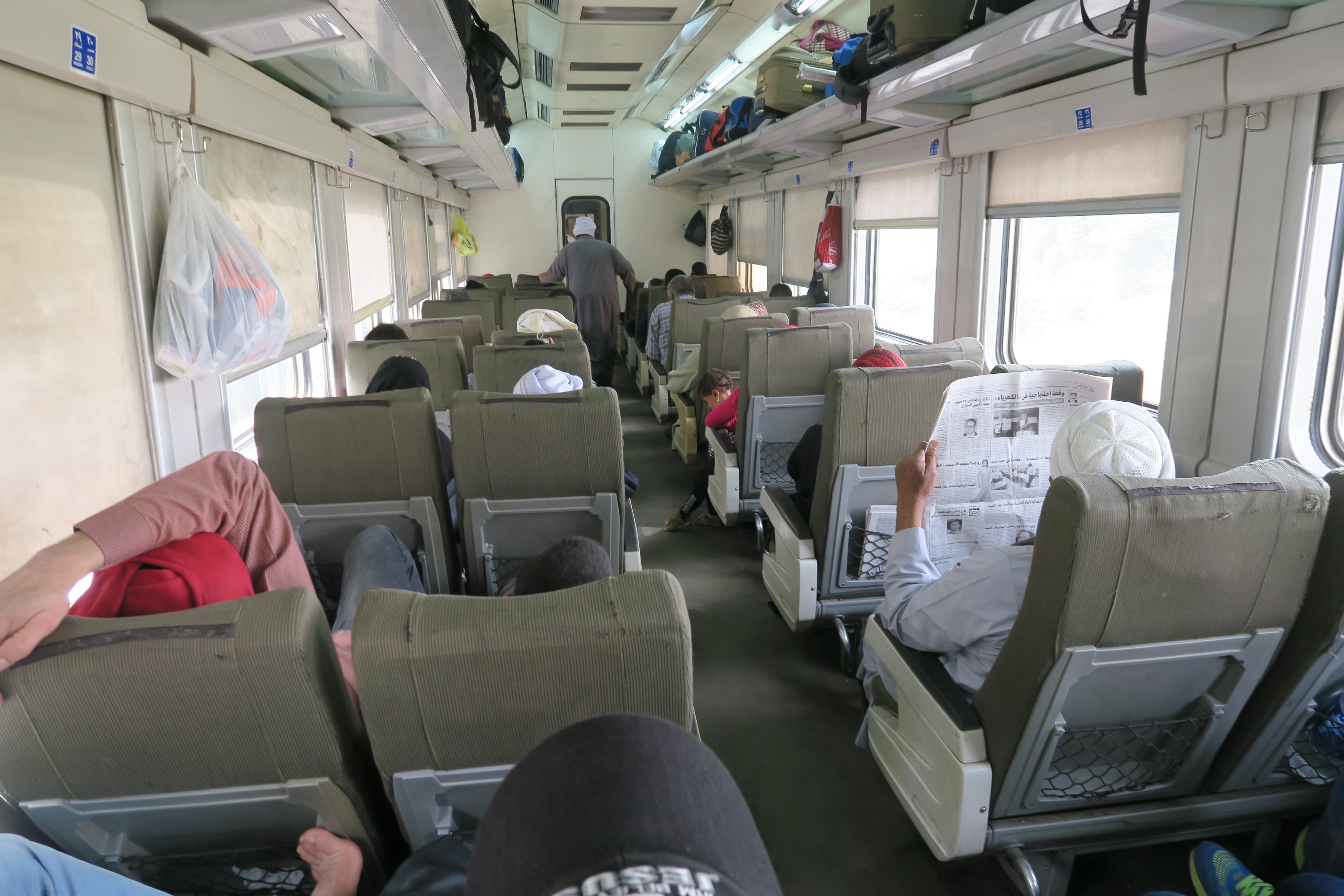
We were booked on the equivalent of the AC Chair Car of Express trains in India, so it was a bit of a culture shock to find ourselves in what we would have classified as a semi / non-reserved compartment with people barging in to occupy seats without reservation and non-stop cacophony of vendors.

IMG_0455

In what we later came to understand is a customary practice, vendors would drop a sample of their wares onto our seat / lap despite our protesting. After doing a full round of one or two compartments, they would be back to collect their things / money if you decided to buy! It was quite humorous for the local citizens watching and they tried telling us it was ok; some even volunteered to collect the stuff dropped onto us and hand it back to the vendors.

A 10-hour journey that turned out to be 11 hours with a mixed bag of roadside Romeo like characters and honest village folk clambering in and out, had me reminisce of my mother recalling the constant “chain pulling” that reduced Express trains to “Passenger” trains in the 1970s as soon as they entered certain parts of the country! And to top it all no views of the majestic Nile until we were nearing our destination as had been promised by our tour leader!! I certainly didn’t mince words to tell Manish what a mistake he had made 🙂

Luxor station, apparently under renovation, beat the smallest of village stations back home with only sand for a platform surface! It reinforced our appreciation (and gratitude) for Indian Railways for the way trains and stations across a huge network are managed with a good enforcement of ticketed travel.

The (mis)adventure of the day was all but forgotten the moment we laid eyes on the beautifully lit-up Luxor Temple and it’s Avenue of Sphinxes from the rooftop of our hotel. With the Nile shimmering in the backdrop and faint lights across from the pyramid shaped Thebes mountain, it   was a blissful setting for a warm dinner.

IMG_0587

IMG_0589

The sharing of this experience has been a few days late coming … too much activity to keep up with! Keep reading and encouraging us!

Mihika has started capturing her experiences to share with the world, please read them at iammihika.com. Thanks!!