
Our maiden visit to South America had a very pleasant start at the Miami International Airport in the very comfortable lounge of Avianca, the oldest operating airline in the Americas and the second oldest in the world after KLM. We were welcomed by a very friendly lady from Colombia with the warmth of the hospitality services we are accustomed to in India and usually miss on our travels to the West. Rested and refreshed we were on our way to Quito, the capital of Ecuador, transiting through Bogota, the Colombian capital and hub of Avianca.
Ecuador literally means the Equator in Spanish, the official language of the country. We landed in the middle of the world in the middle of the night and were pleasantly surprised and happy to see that all the immigration officials, barring one, were women! I do not recollect having seen a single female immigration official in any of the airports in India and now I wonder why?
As we were being driven to our hotel from the airport, it felt like we were headed to a hill station. I didn’t realise then that Quito, at an altitude of 2,850 metres above sea level, is the highest of all national capitals. The next morning we could see just how many hills and valleys there were in this city.
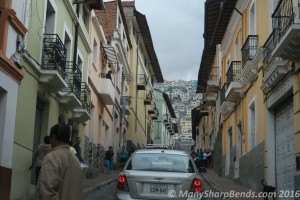
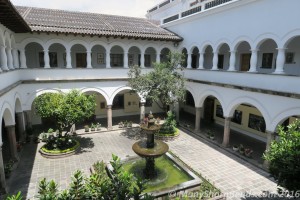
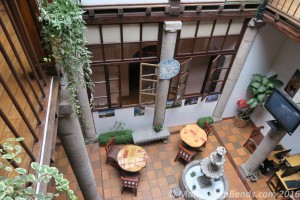
We stayed in old Quito, the historic centre characterised by cobbled streets, monuments and colonial style buildings, that became the first UNESCO World Heritage Site (along with Krakow). Our hotel was an old bungalow with a central courtyard, a common feature of traditional homes in many parts of India. The Presidential Palace of Quito features this too. I am sure you can guess which of the two courtyards below is our hotel’s and which is the Presidential Palace’s 🙂
We spent the day exploring the
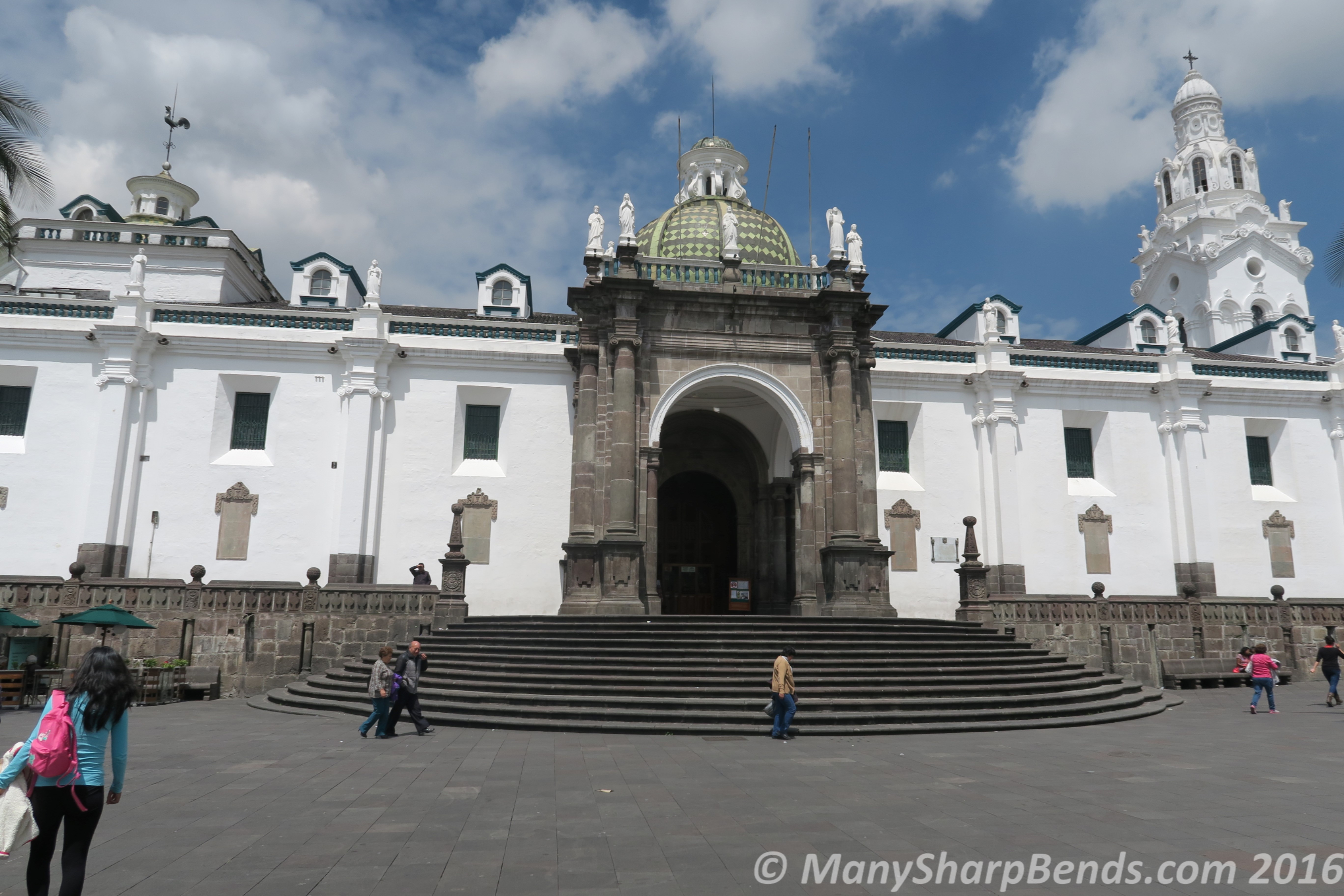
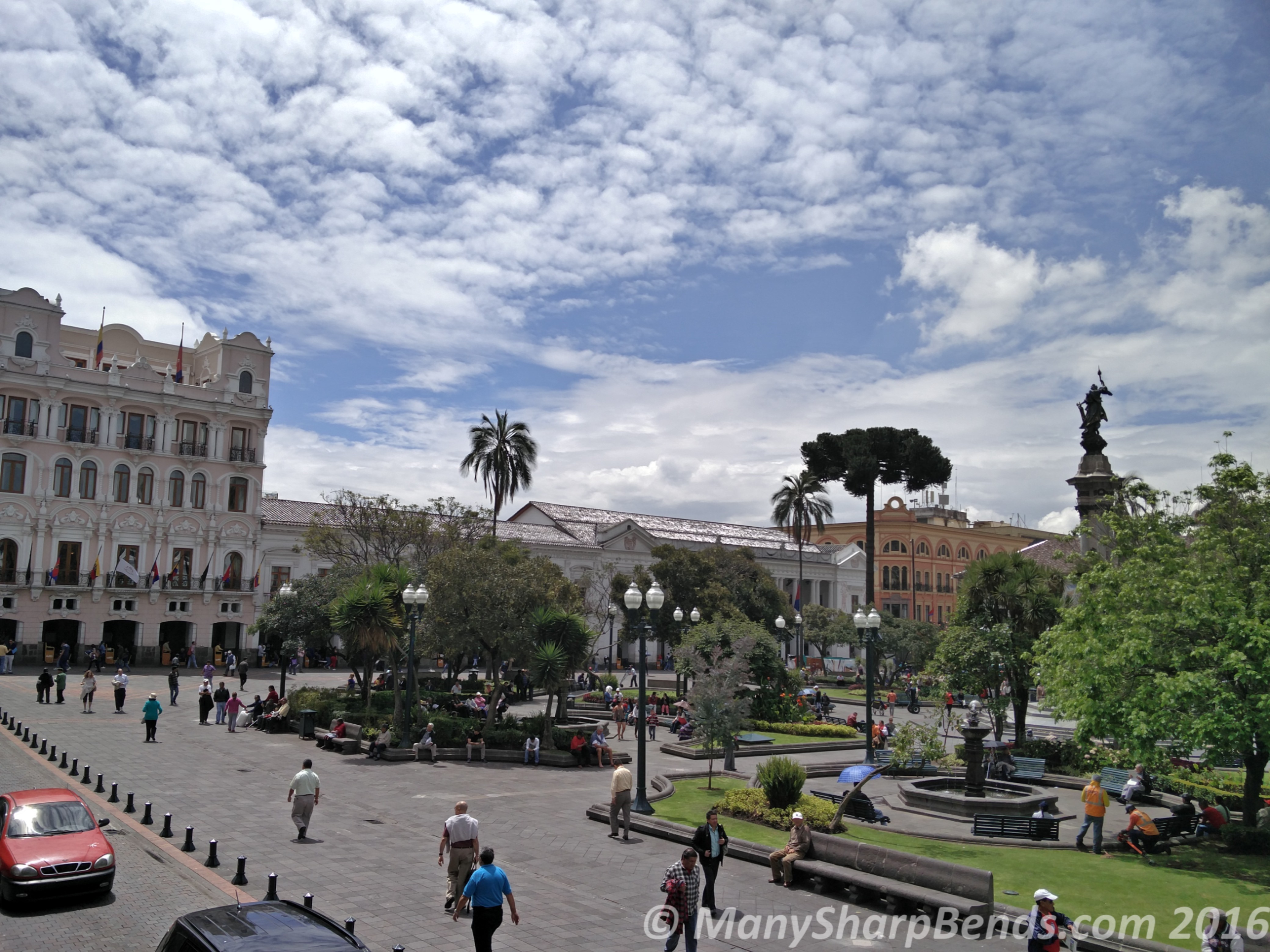
monuments and sights starting with the central square, the Plaza de la Independencia more commonly known as Plaza Grande, that is flanked by the Presidential Palace and the Metropolitan Cathedral and the Archbishop’s palaceof Quito.
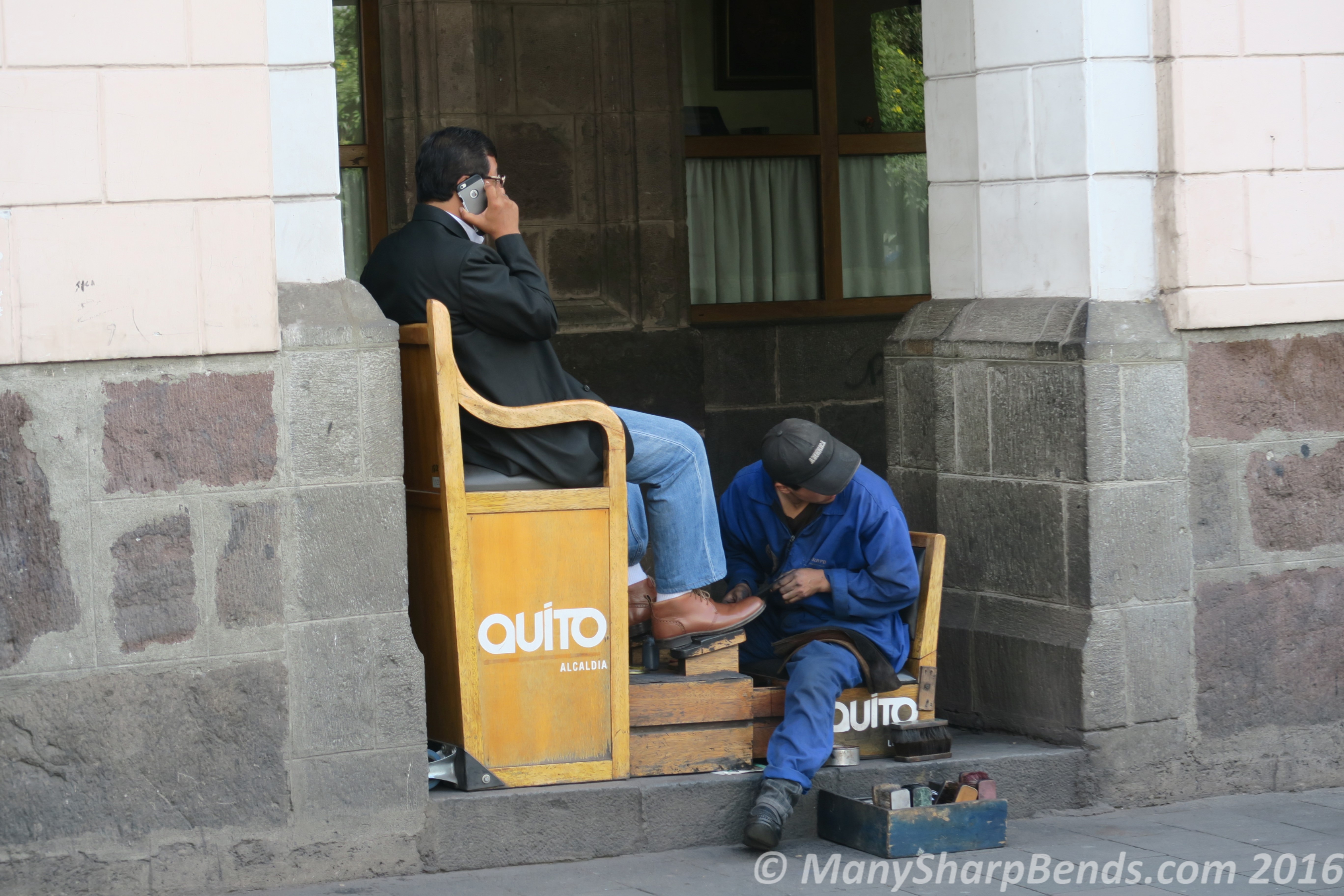
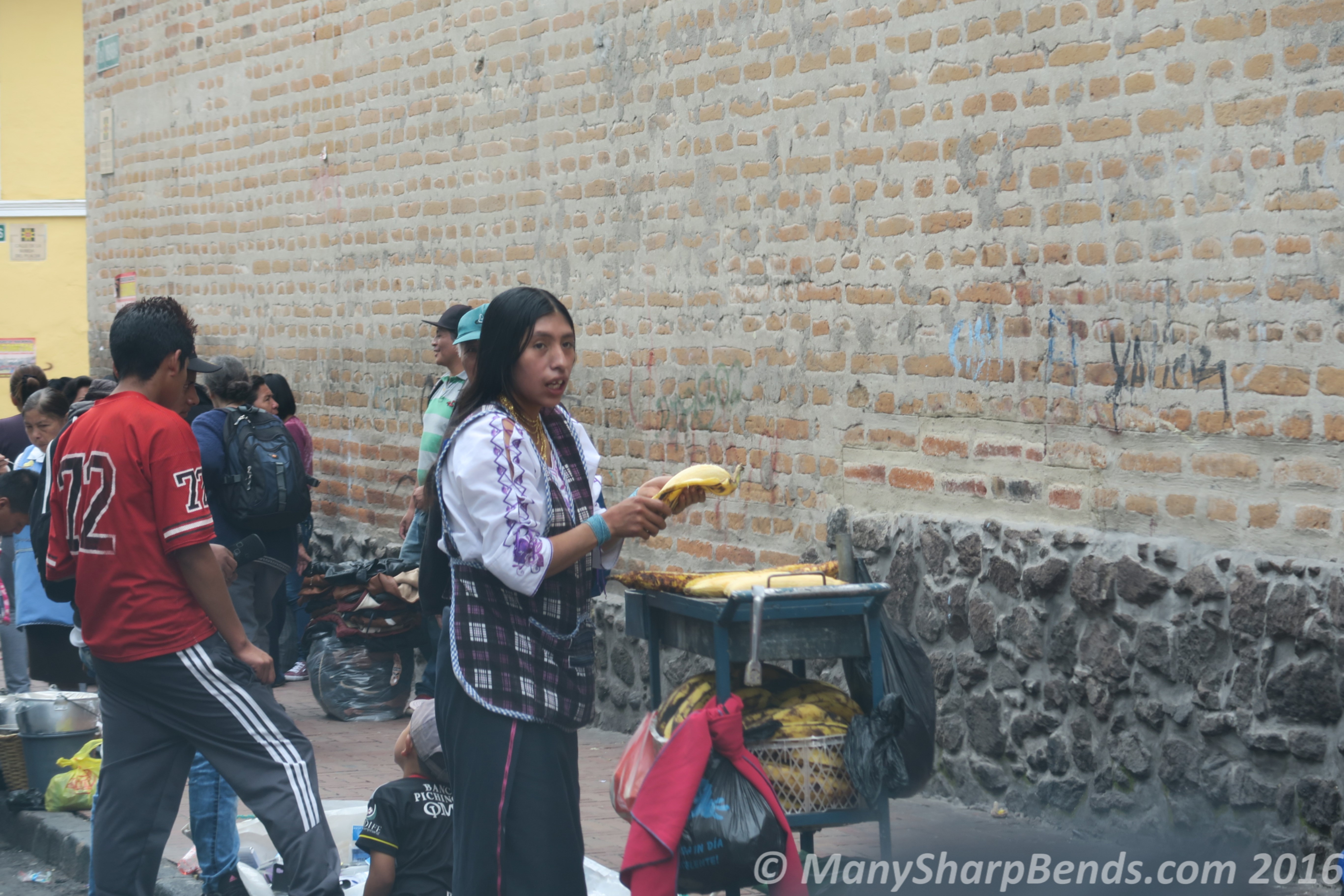
 It was a bustling square with vendors selling a variety of fare – handmade shawls, hats, eatables and so on. An interesting feature were the shoe-shine boys on one end of the square.
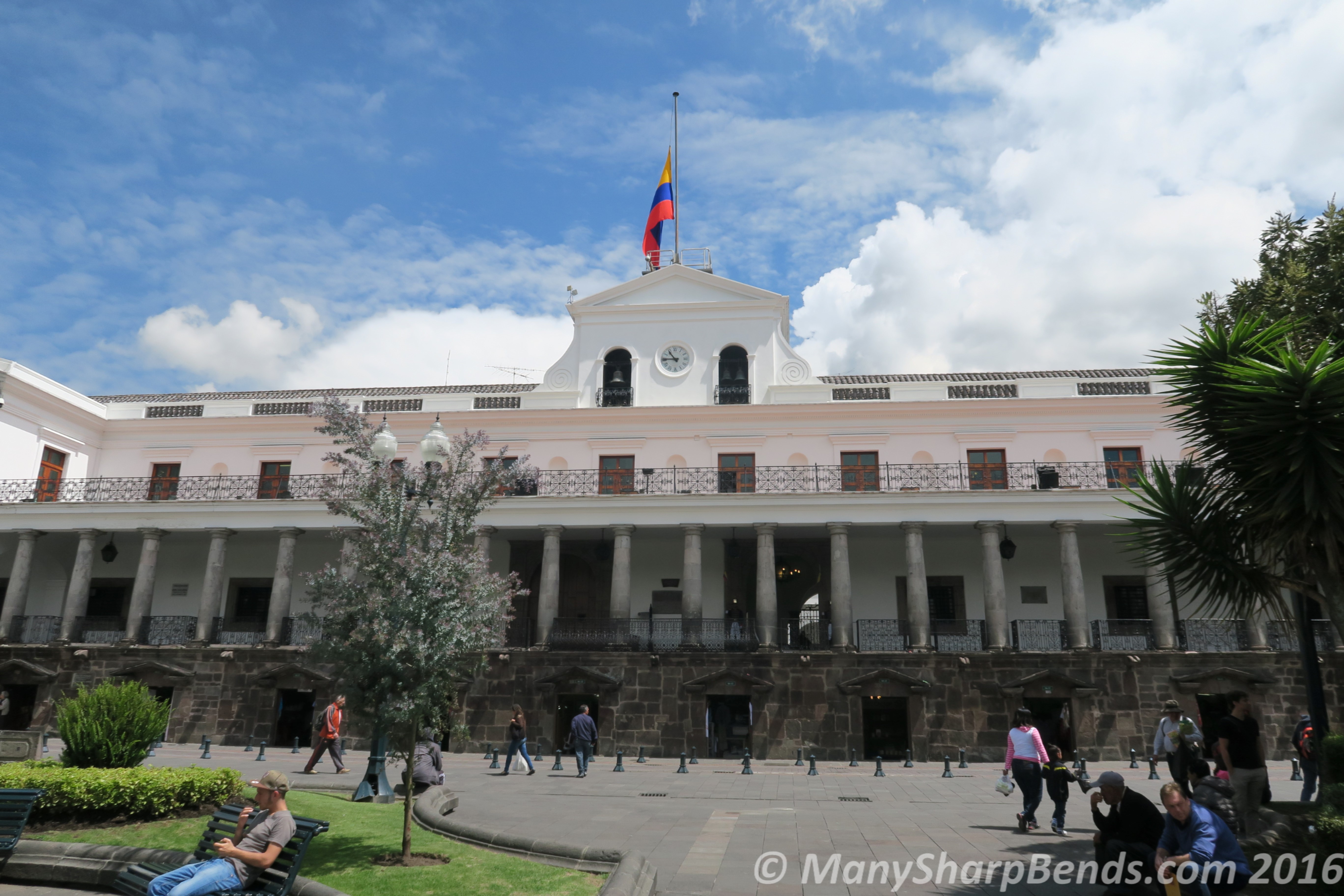
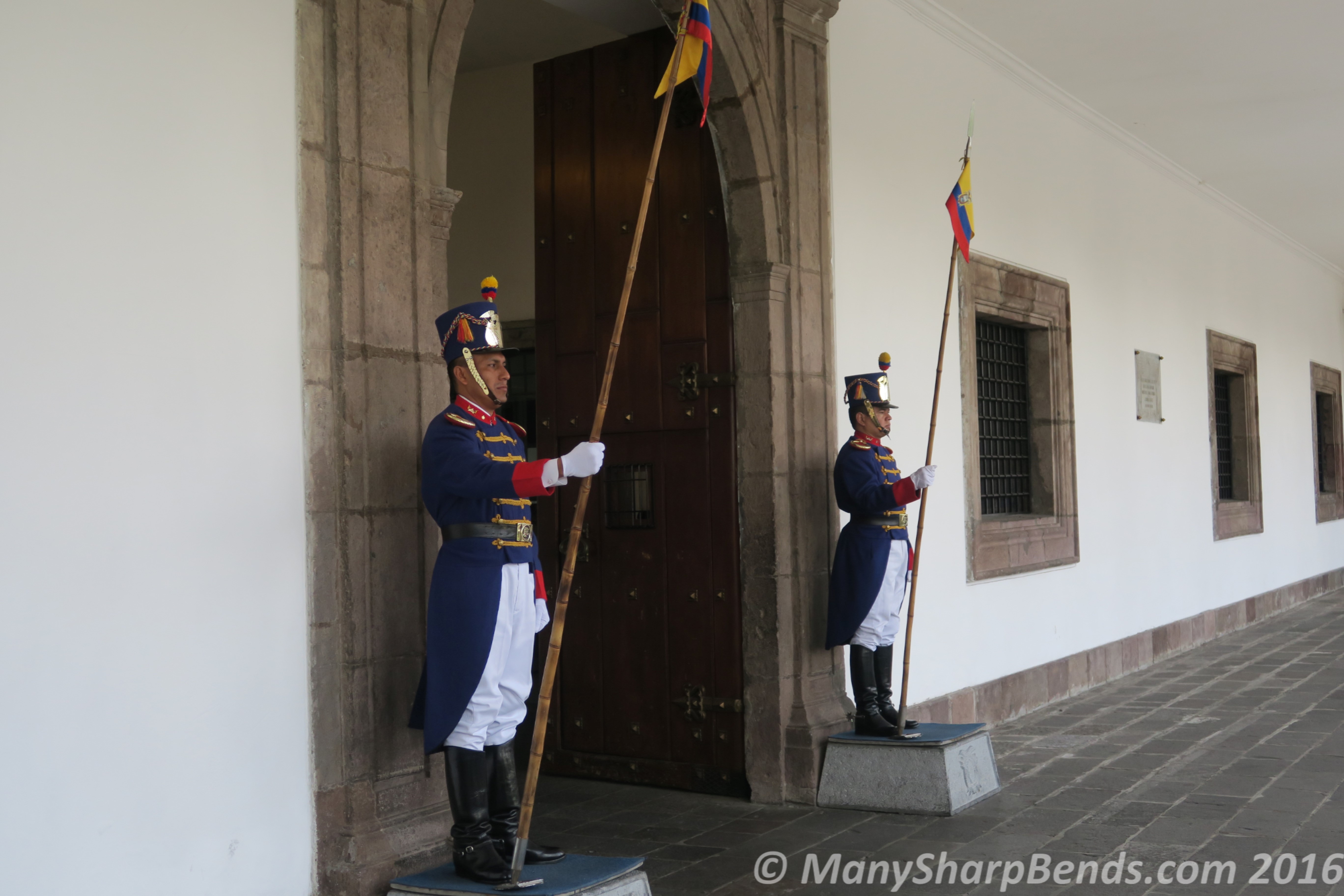
Next we headed for a guided tour of the Presidential Palace that was possible since the President was not in residence on the day. We had to handover our passports and go through expected security checks to enter the building that had no external signs of opulence.
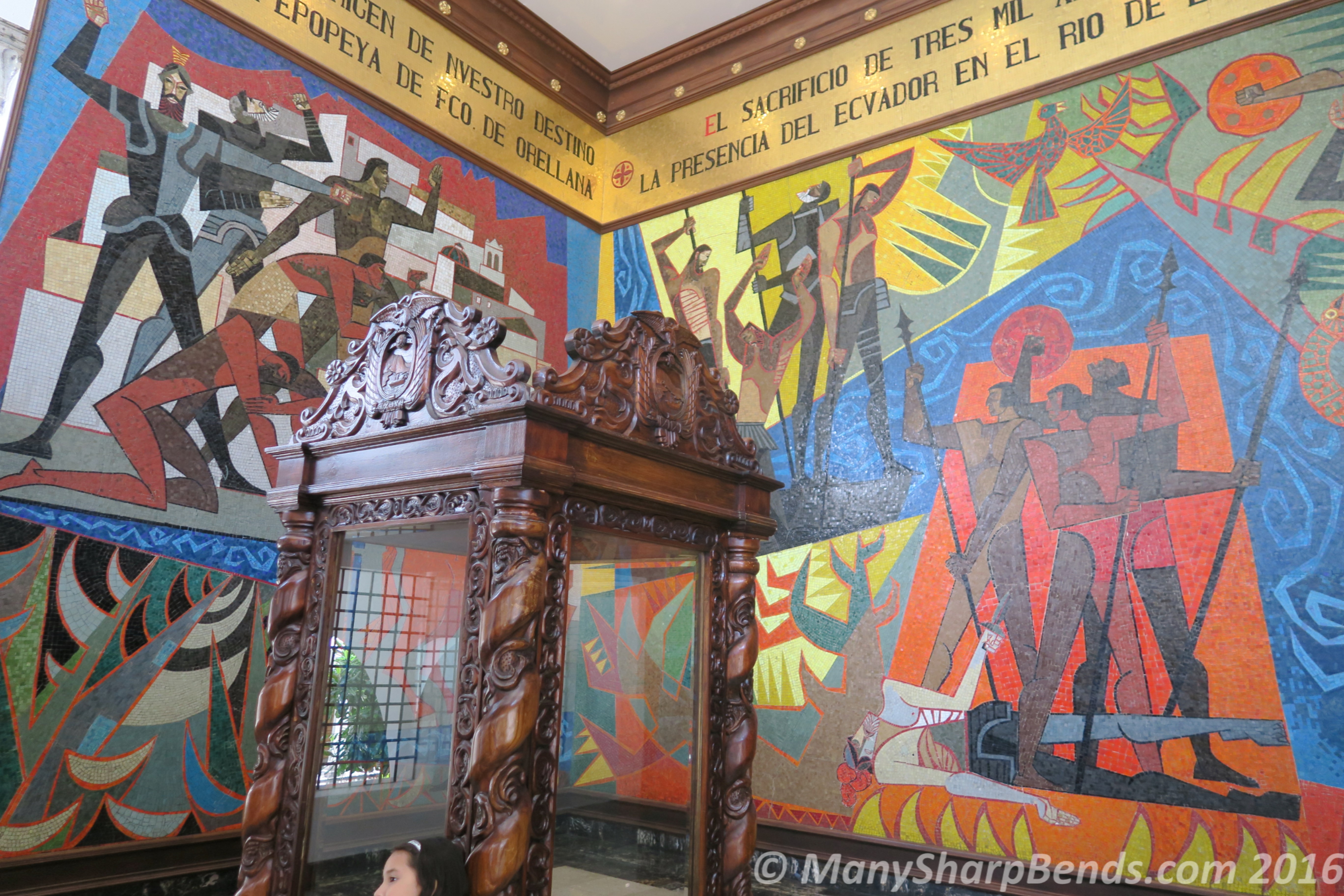
We started with huge murals depicting the discovery and conquest of the Amazon by the Spanish and walked through lavish meeting and banquet halls before stepping into the radiant “Yellow Room”.
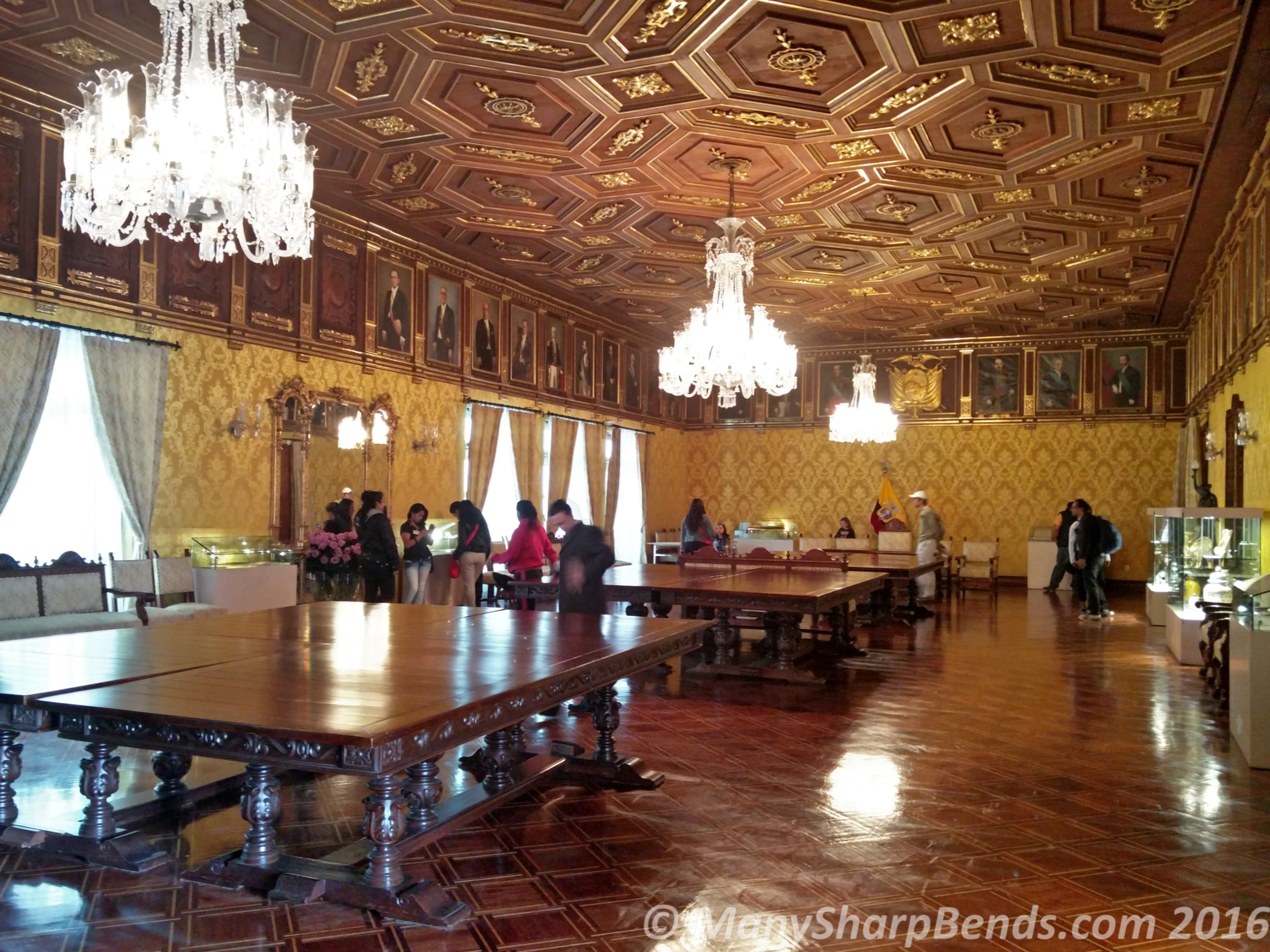
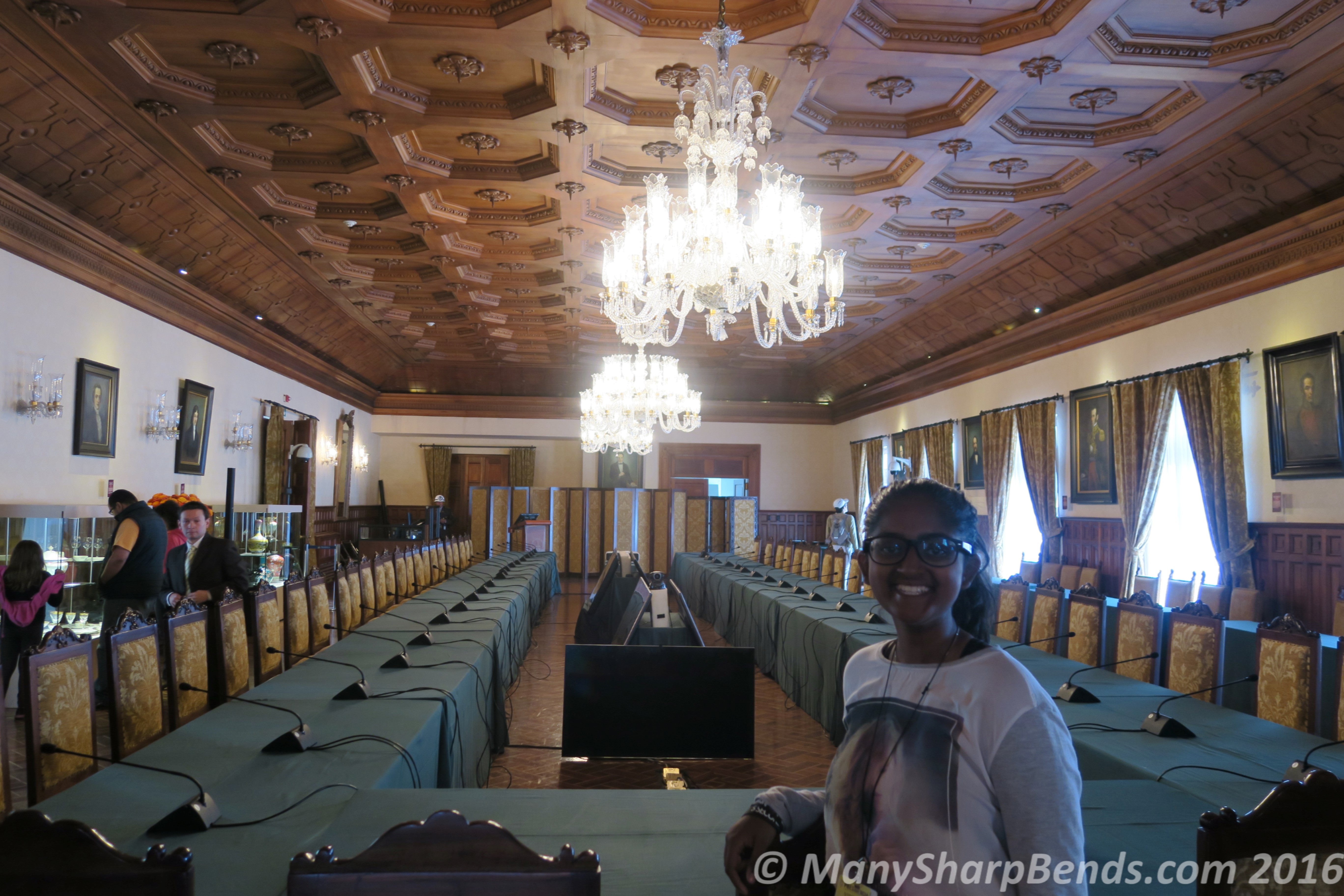 All gifts received by the various Ecuadorian presidents from different countries were on display. Samples here are from Peru and Saudi Arabia.

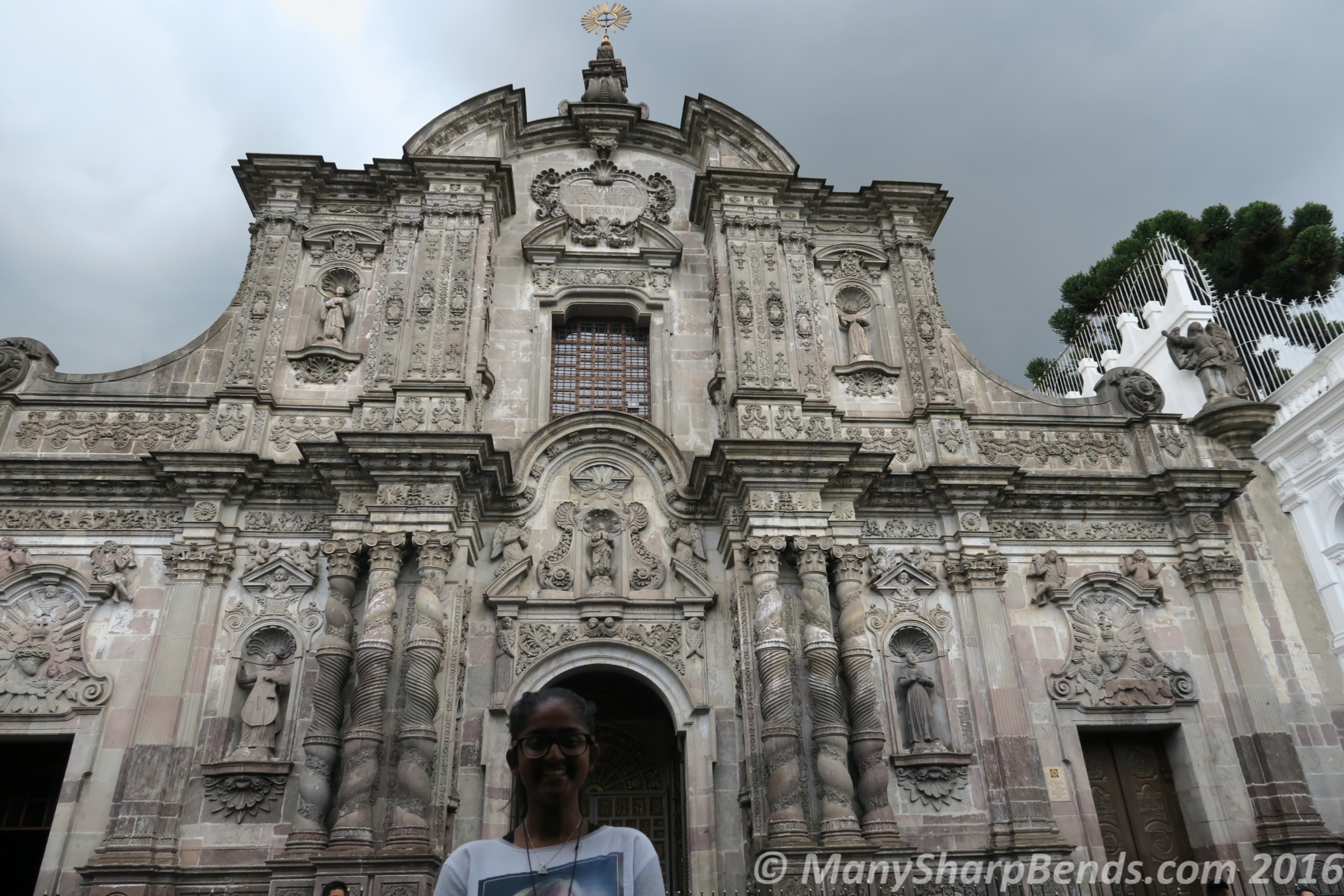
 We then strolled out onto the cobbled street and headed to La Iglesia de la Compañía de Jesús (the Church of the Society of Jesus) known for its Baroque style architecture and ornate interiors with elaborate gold leaf decorations on its walls and high ceiling. The facade of the church bears no hint of the splendour inside.

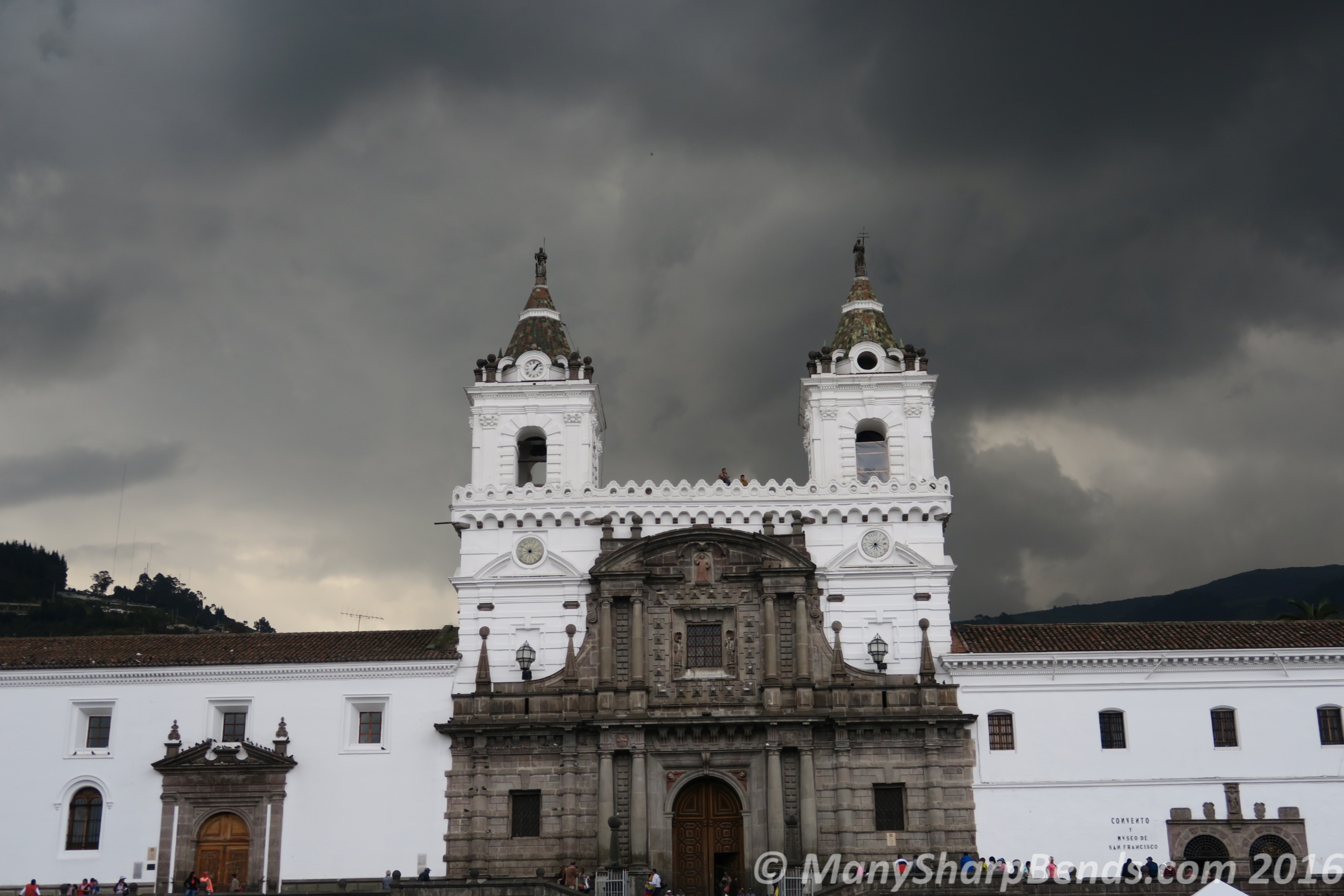
The next highlight was Iglesia y Monasterio de San Francisco (Church and Monastery of St. Francis) featuring twin bell towers. Notice the storm clouds gathering above the bell towers!
As we walked through this pretty part of the city, we noticed how well the traffic was being managed through these narrow streets by very committed traffic-police, most of them being women! No wonder there are no traffic jams here.
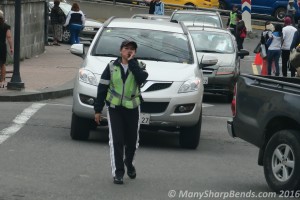
We walked on to the La Ronda street which looked picturesque and right out of a European town with eateries lining the pedestrian-only cobbled street. As the street comes alive in the evenings, we decided to come back there for dinner.
And there were women constables patrolling the streets.
 It was great to see so many women in law enforcement roles, more so because traditionally there has been a disparity in women’s status in terms of education and economic status.
In the evening we strolled around to take in the evening lights & atmosphere and stopped by a small eatery to taste our first Humitas, a traditional steamed corn snack. We saw many signs of “Cafe con Humitas” suggesting it was something like “Chai with Samosa” for the locals. Corn and plantains are a big part of the daily diet here. We returned to La Ronda and found a place with a guitarist playing & singing as a nice way to wrap up the day. Given the lack of an English menu, vegetarian food and English speaking folks around, it took some effort to choose what we wanted. Just when we sat back to enjoy the music, Manish realised the backpack he had placed next to him was missing! A frantic search around the place ensued and quite soon it was clear the bag had been taken. The usherer at the door thought a guy who just left the place had taken our bag mistaking it for his own and ran out to find him. We found another backpack neatly tucked away a little further from our table, but given the place & manner in which it was kept it became apparent that it was not a mistake at all by the person who had taken, rather stolen our bag. As we stood on the street quite shaken thinking about what happened and asked to restaurant to call the police, we recollected the contents of the bag. To our utter relief, the bag didn’t contain our passports and any valuables. Thanks to Manish’s research on safety during travel and his habit of preparing for the worst, he had our passports, cash and cards all on his person. We figured we had lost our rain jackets, a portable mobile charger & phone cable, some medicines & first-aid and a water bottle. The police arrived immediately and they called for an English speaking officer who also turned up pretty quickly. On hearing the details, they apologised for our bad experience, duly recorded our complaint and gave us a copy of the report. The restaurant turned in the backpack left by the thief who for sure would have cursed his bad luck at getting nothing of value in return for the loss of his own backpack! Not in the script as Manish said, but a briefly nerve-wracking experience to reinforce the absolute need for alertness in cities.
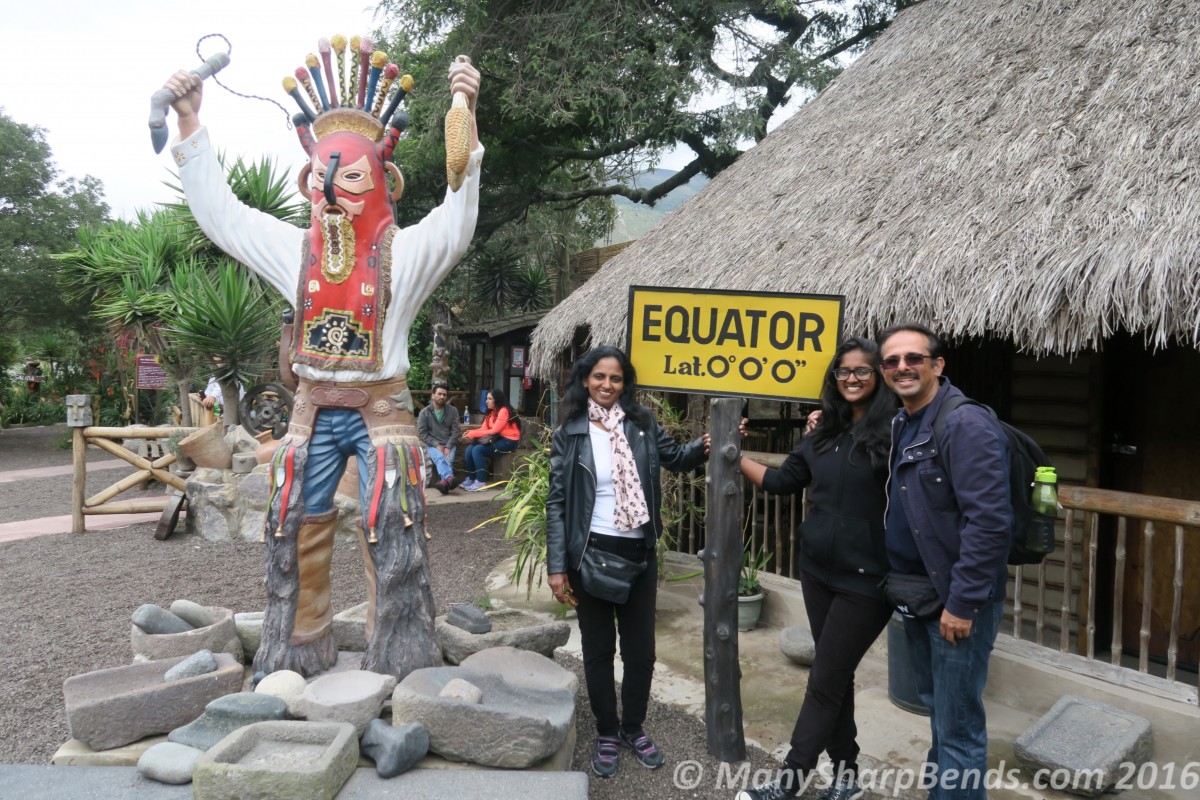
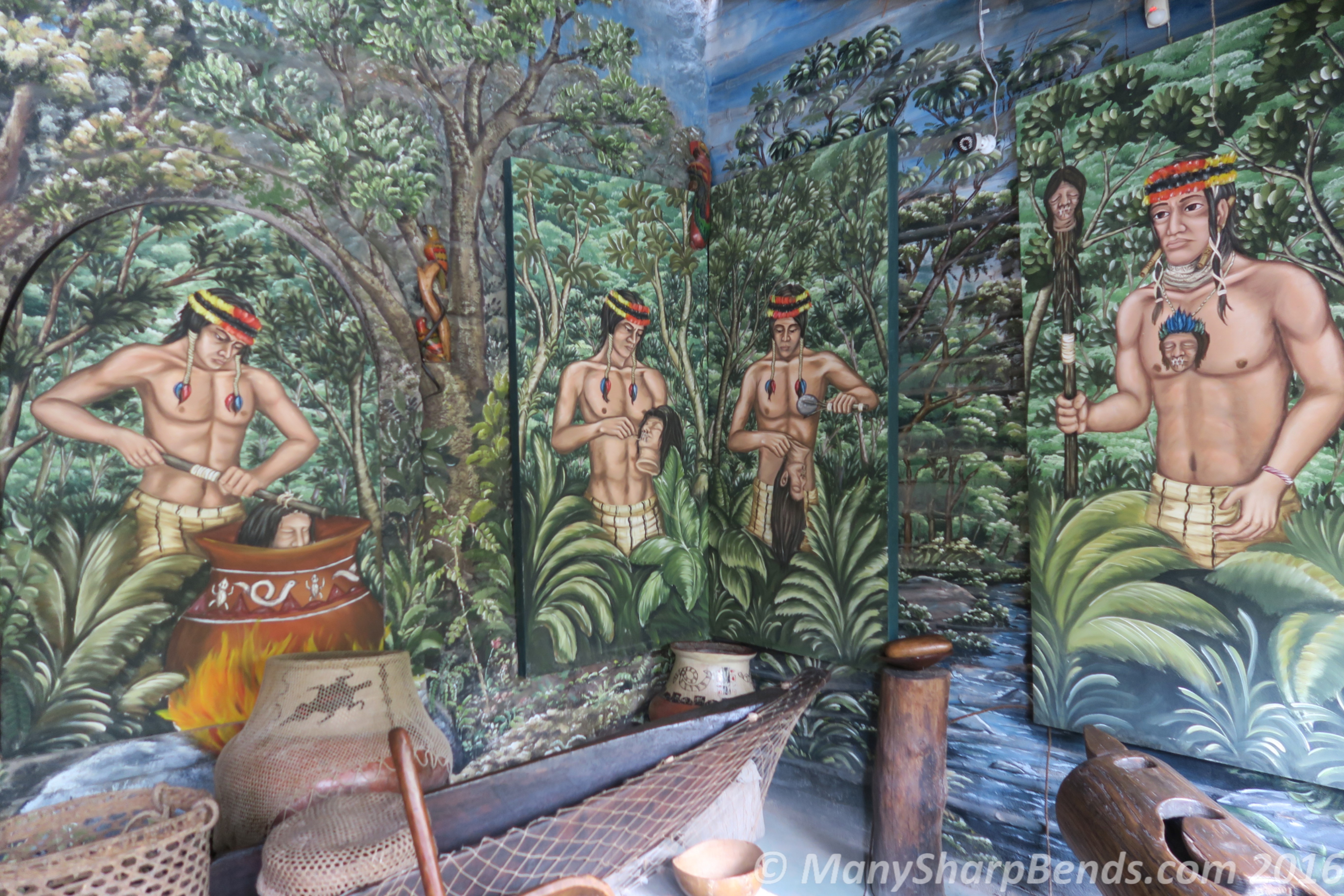
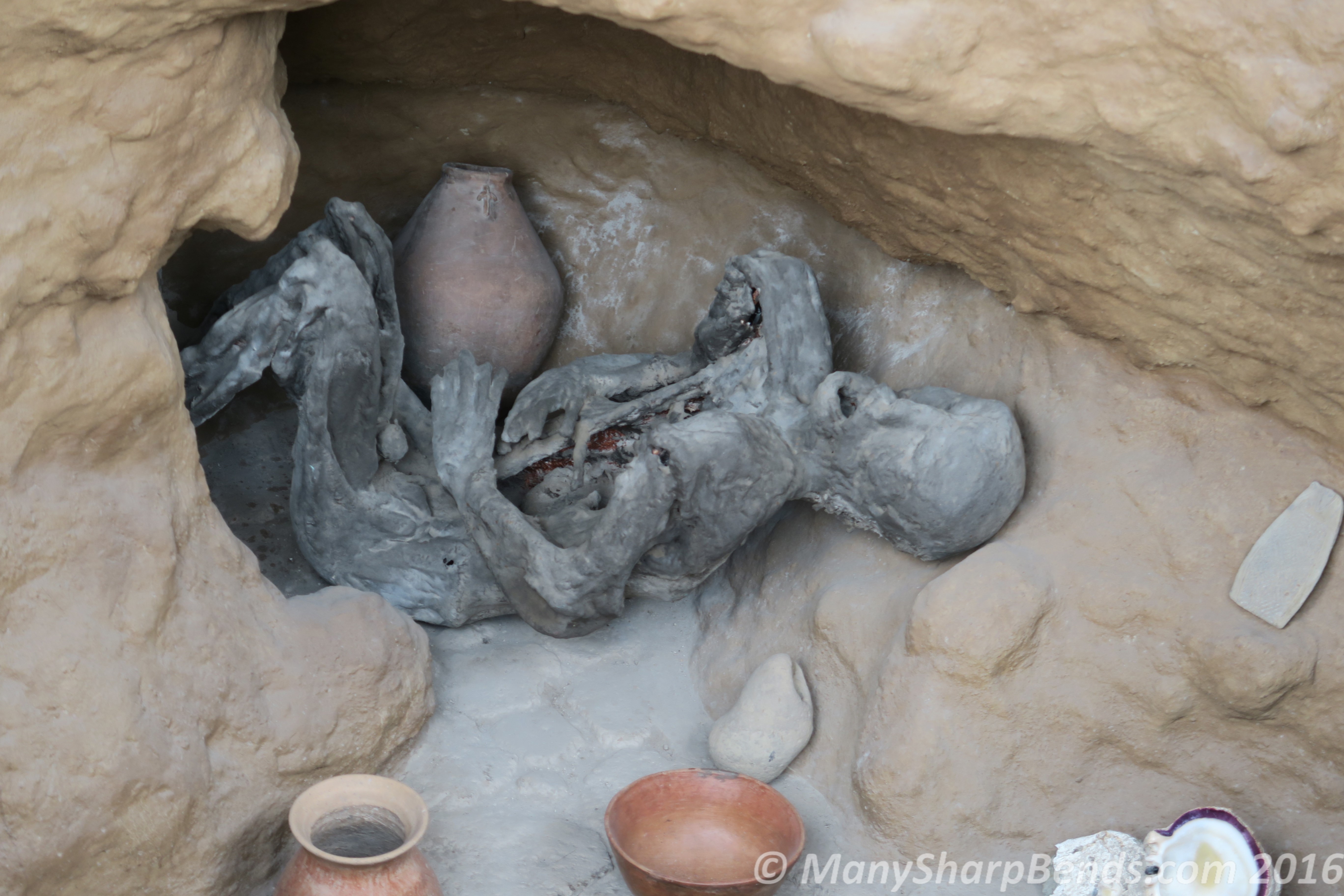
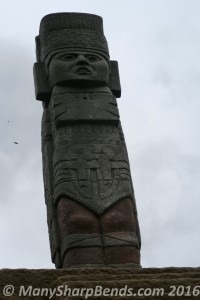
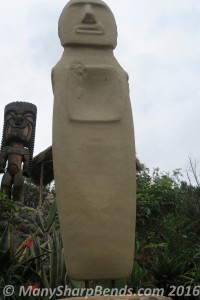
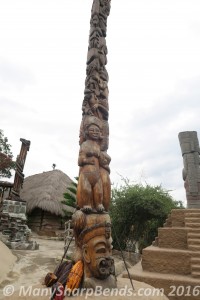
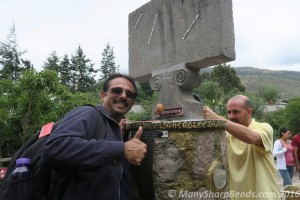
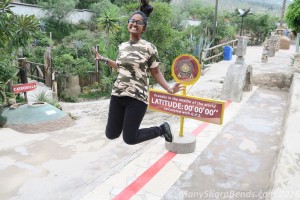
The next day dawned, we put the previous evening firmly behind us and headed right to the middle of the world – latitude 0°! Interestingly, before the advent of GPS, the location of the Equator near Quito had been wrongly marked and the official monument Ciudad Mitad del Mundo (Middle of the World City) is situated about 200 metres south of latitude 0°. So instead of  this we headed to the Intiñan Museum that is closer to the right spot. Here we heard some interesting facts about the native tribes of the region, saw totems representing Inti (the Sun) from different countries, witnessed experiments demonstrating the Coriolis effect, tried our hand (successfully) at balancing an egg on the head of a nail and walked on the red line representing the Equator.
Balancing acts, each one trying to centre ourselves!
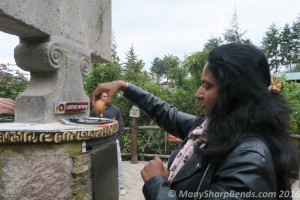
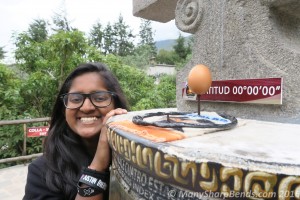
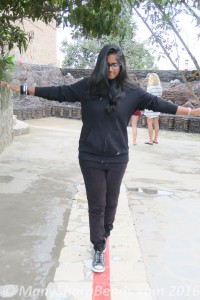
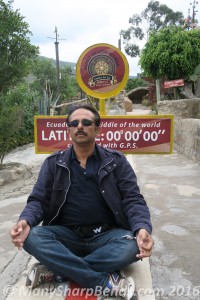
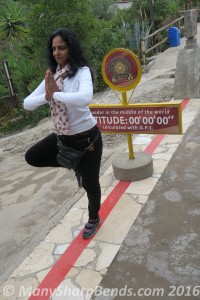
The below pics of parent and child on the two hemispheres are symbolic of the differences that exist (and always will!) between generations, despite our attempts to be “cool” parents. We’ve decided to just “mind the gap” and Mika is happy we finally accept the “gap”!


The demonstration of the Coriolis effect helped us understand the difference in the directions of weather systems north and south of the Equator – hurricanes & tornadoes that hit North America move in an anti-clockwise direction while typhoons in South America have a clockwise circulation.
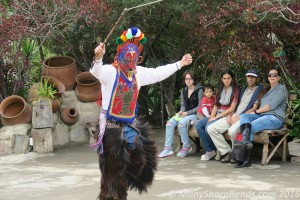
The tribal handmade crafts on display were a colourful visual treat and we also witnessed a demo of a tribal dance.

From here we headed further up the Andes towards Mindo for a rendevous with the clouds in the cloud forest and an opportunity to see some of the hundreds of bird species that inhabit them. Needless to say, some of the bird species are in danger of extinction.
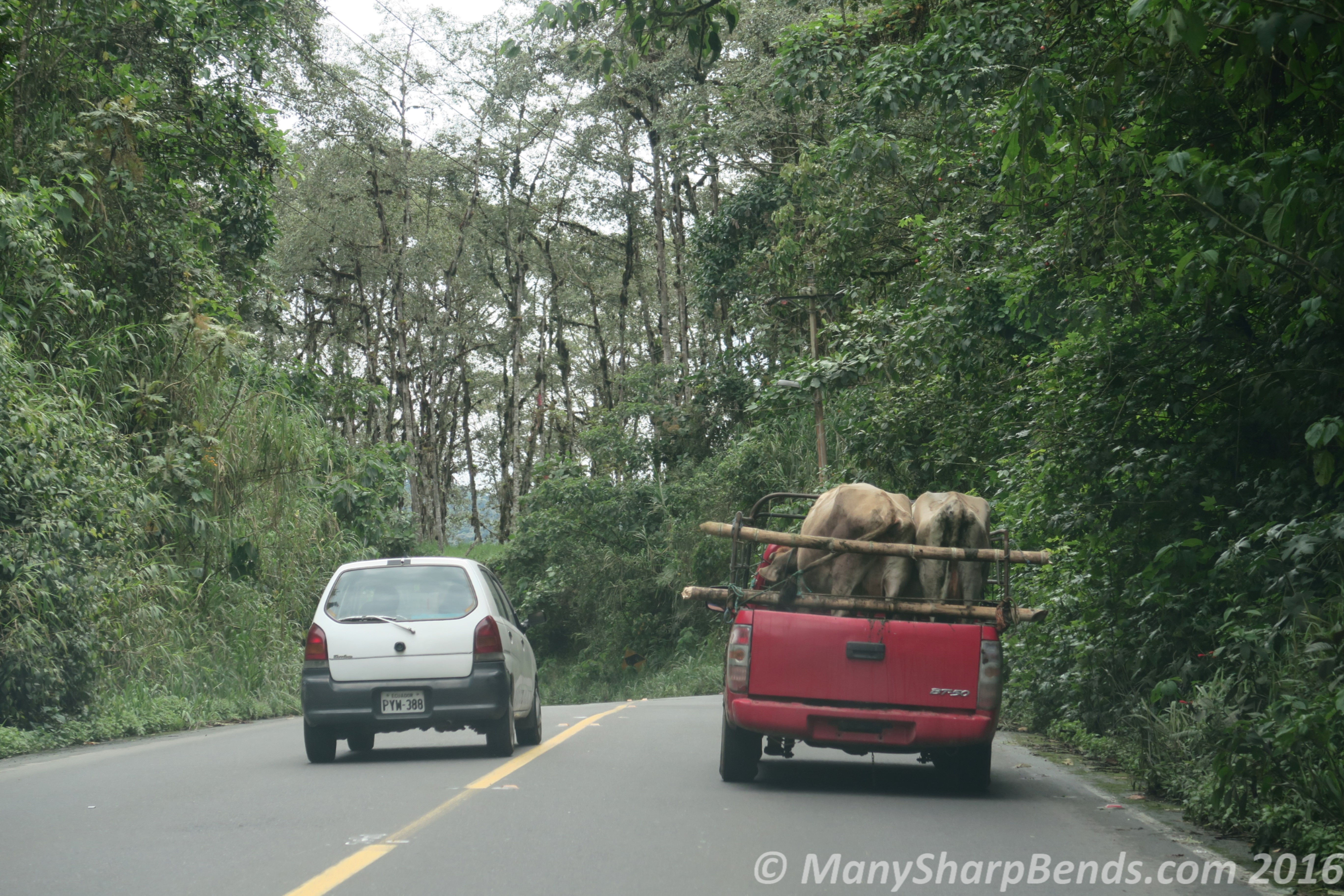
In our journey of about an hour & a quarter, we came across some scenes reminiscent of home – what car would you say is the one overtaking the cattle carrier?
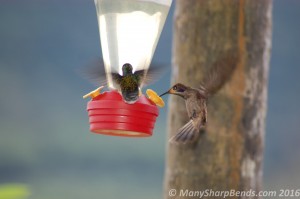
In our Mindo hotel balcony we found ourselves at an arm’s distance from Hummingbirds of so many different types with their resplendent colourings shining in the sunlight that we remained excited, mesmerised and clicking away for a long time! It was unbelievable to see so many of these tiny birds feeding with their wings flapping rapidly at the feeder placed by the hotel staff. We got to see from close up the backward flight that we had heard and read about. And various kinds of colourful Tanagers were frequenting the guava tree next to our balcony, making us wonder at the colours and types of the birds residing in the forest where we would be heading to the next morning!


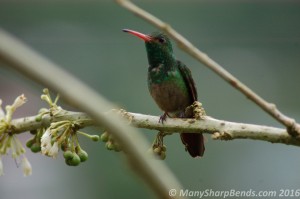
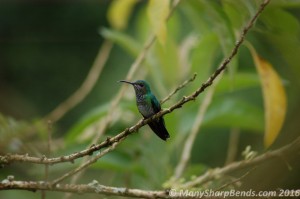
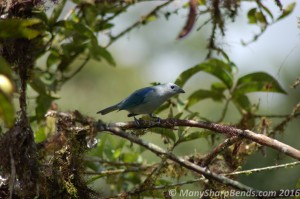


We strolled through the rather little main street in this quaint little town, more like a village actually. We loved the peaceful, laid-back atmosphere and had an enjoyable dinner of fresh handmade pizza at a local bakery. Mindo is not a typical family destination, it is a haven for backpackers and young travelers who are either nature lovers or adventure-seekers coming here for the thrills of rafting, tubing and canyoning.
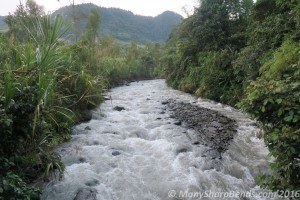
It was an early start the next morning and a pleasant walk with our naturalist and guide Irman where he pointed out many Tanagers and small birds like Seedeaters quite early on. We were eager to see the bigger & brighter ones that are much harder to spot. We admired the streams and the view of the clouds touching the forest canopy on the way.
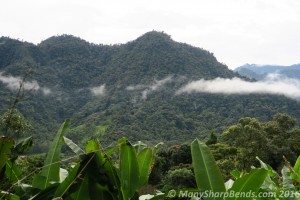
Hearing the calls of toucans, our guide ushered us on. The first ones we got to see were the Crimson-rumped Toucanets, a smaller variety of the Toucan family and then the big Pale-mandibled Toucan. What a majestic sight!


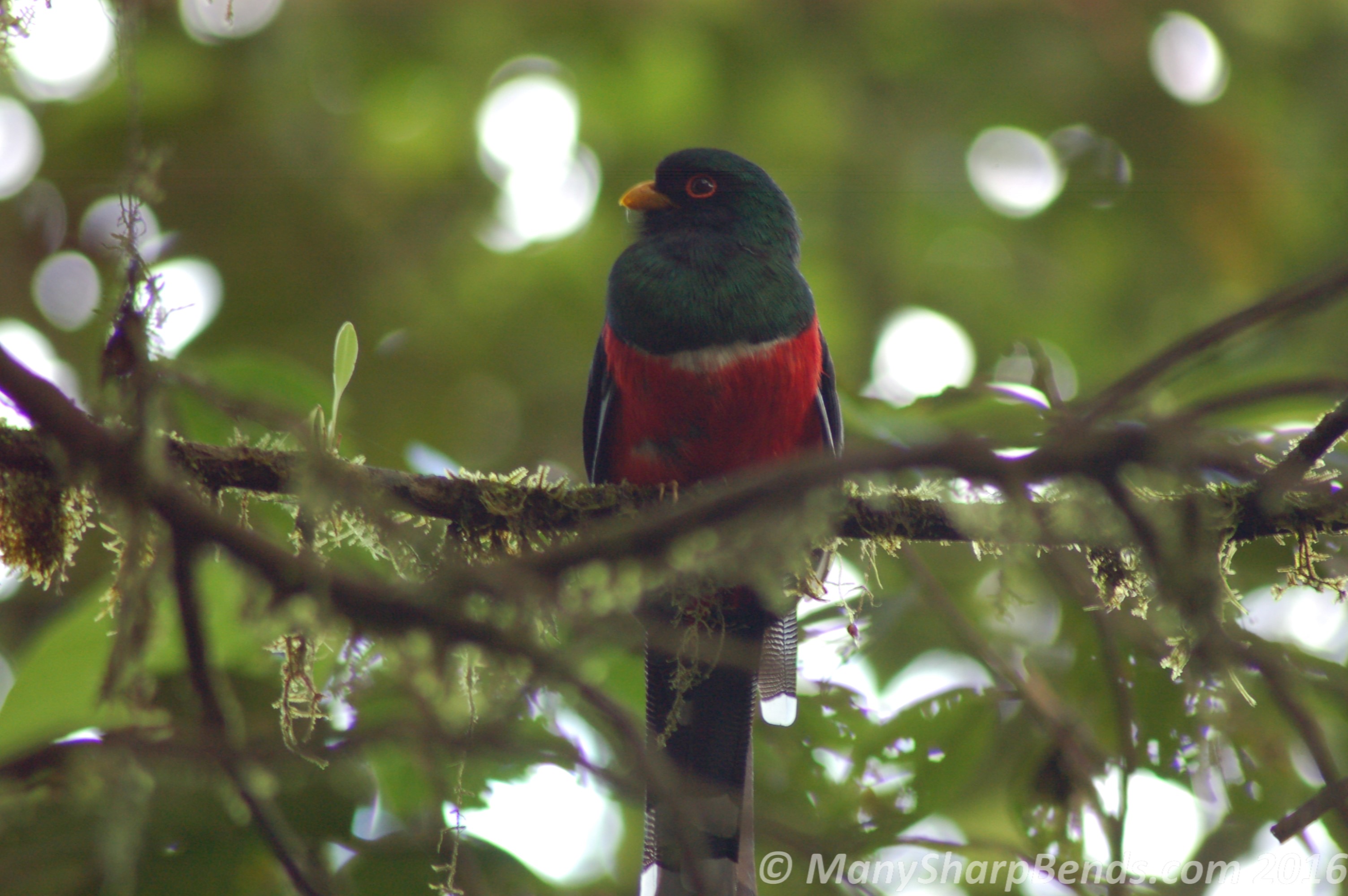
Then came a really beautiful call that got our guide all excited and soon enough we were rewarded with the sight of an amazing bird – the Masked Trogon, what a beauty & what a beautiful call!
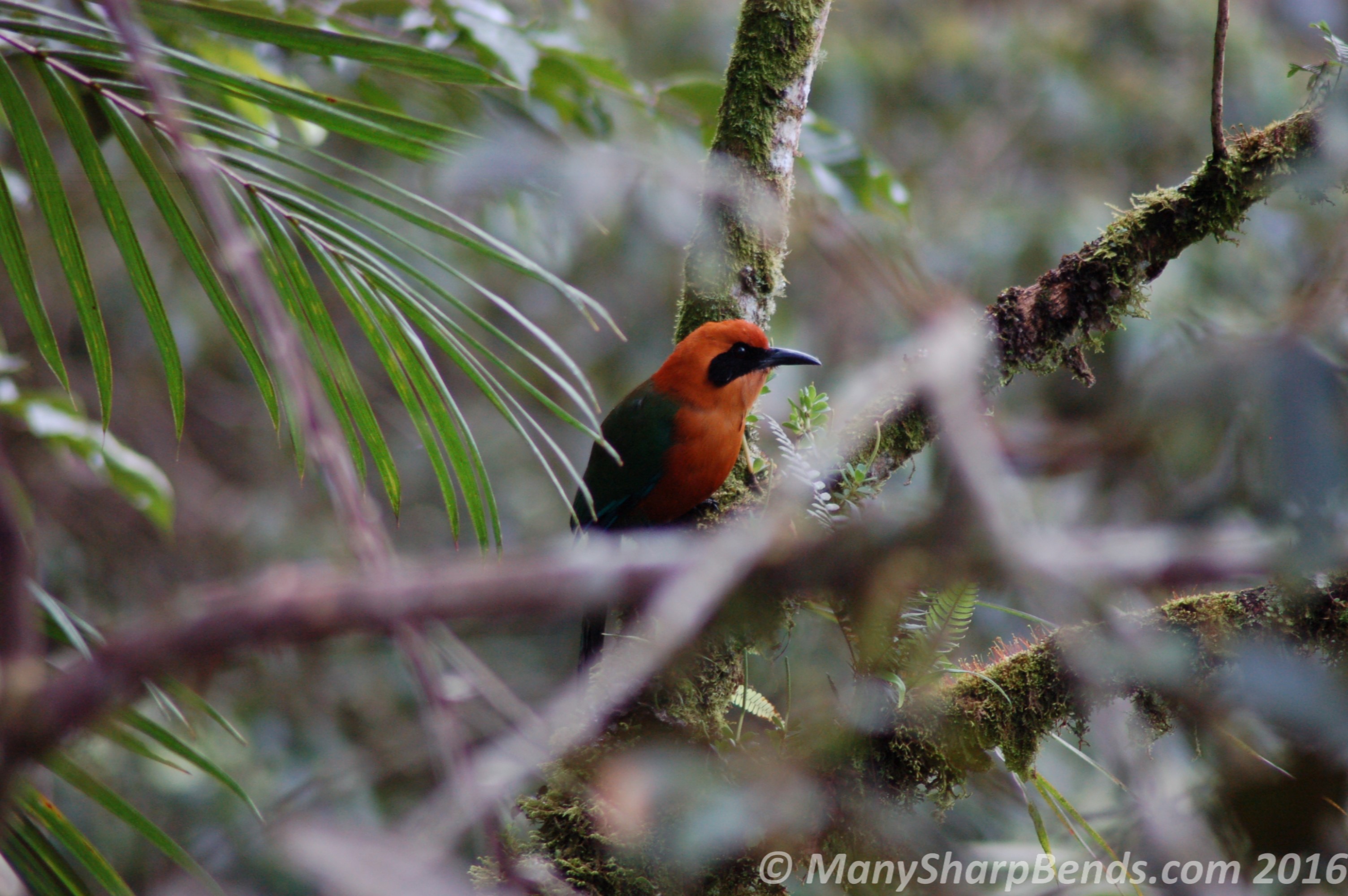
Another beauty that we saw a couple of was the Rufous Motmot.
We learnt that it is common practise for many of the residents to place food (bananas) in their backyards to feed birds. This attracts many colourful birds from the forest to come and feed, providing an easy opportunity to see them from close quarters. We did this at the end of our forest walk in one of the little farms and got to see the bright Red-headed Barbet, Toucan Barbet and Golden Tanager amongst many others.


Amazed by the stunning colours and beauty, we spent many more hours admiring our own clicks of these wonders of nature and watching the thunderstorm of the late afternoon with the rain continuing through the night.
Having experienced the stunning diversity of mainland Ecuador, we were all keen to head out to the islands of Galapagos to see Evolution in action! Though part of our Ecuadorian Odyssey, Galapagos demands a separate post for it has way too much to offer and is truly a world apart.
Thanks for reading and being a part of our journey!